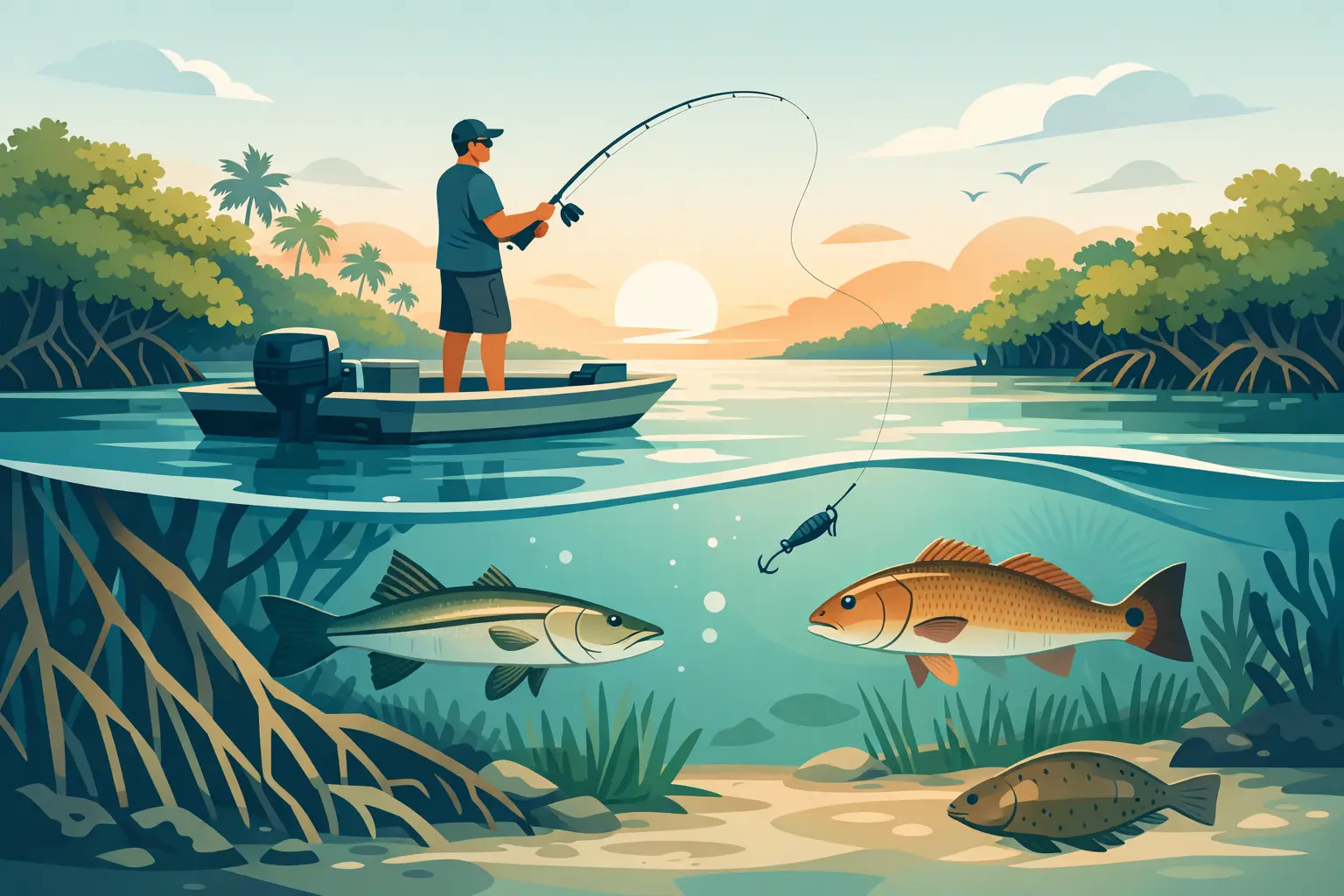
A backwater fish does not care how new your rod is or how far you cast. It cares whether your bait arrives naturally, whether the tide is moving, and whether your boat announces itself like a floating parade. Learning how to catch backwater fish starts with slowing down and reading the water around you.
In the mangrove-lined bays, grass flats, oyster bars, and passes around Fort Myers Beach, fish are rarely scattered at random. They use current, cover, and changing water levels to feed efficiently. Once you recognize those patterns, a beginner’s outing becomes much more than casting and hoping.
Start With the Tide, Not the Tackle
Tide movement is the engine of backwater fishing. Moving water carries small crabs, shrimp, baitfish, and other easy meals past ambush points. When the water moves, predators such as snook, redfish, spotted seatrout, mangrove snapper, and sheepshead have a reason to feed.
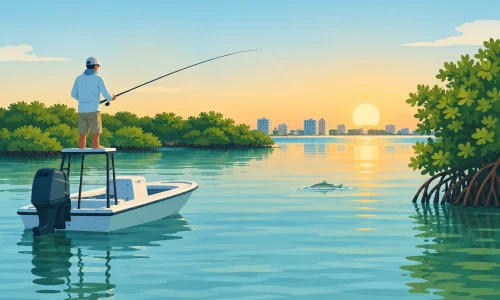
An incoming tide often pushes bait up onto shallow grass flats and into mangrove shorelines. This can be an excellent time to work the edges of flooded roots, creek mouths, and potholes in the grass. Redfish may nose along the shoreline looking for crustaceans, while snook commonly hold close to mangrove cover where they can dart out at a passing bait.
As the tide falls, fish frequently slide toward deeper cuts, oyster bars, creek channels, and the mouths of small bays. The water is leaving the buffet, and fish know where the food has to travel. A falling tide can concentrate fish nicely, but be mindful of depth. Southwest Florida’s shallow backcountry can turn a pleasant drift into a mud-flat lesson faster than expected.
Slack tide is not always a lost cause, especially around deeper structure or on a cloudy day, but it can be slower. If the water looks still enough to show every boat wake for a mile, use that time to reposition, observe birds, and prepare for the next phase of moving water.
How to Catch Backwater Fish by Reading Habitat
The best-looking shoreline is not automatically the best fishing spot. A long wall of mangroves may hold fish, but the highest-percentage areas usually offer a little extra: a point that meets current, a small drain, a shaded overhang, a sandy pocket, or a cluster of exposed oyster shells.
Mangroves: Cast Close, Then Closer
Mangroves provide shade, protection, and a steady supply of food. Snook are famous for holding tight to their roots, sometimes in water that seems too skinny for a respectable fish. Redfish, juvenile snapper, and jacks may use the same cover.
Make casts parallel to the shoreline rather than firing straight into the branches every time. A bait traveling along the edge stays in the strike zone longer and is less likely to become a decorative mangrove ornament. If a shoreline has a small indentation or feeder creek, give it several quiet casts. Those pinch points are natural feeding lanes.
Grass Flats: Look for Edges and Potholes
Seagrass flats are living nurseries, full of small fish, shrimp, and crabs. Spotted seatrout often patrol deeper grass edges and sandy potholes, while redfish may cruise the shallows with their backs nearly breaking the surface.
Watch for nervous water, bait flicking at the surface, mullet pushing along a shoreline, or a sudden flash over a sand hole. These signs are more useful than randomly covering every inch of a flat. On clear, shallow water, polarized sunglasses help you spot movement before the fish spot you.
Oyster Bars and Structure: Productive, but Not Forgiving
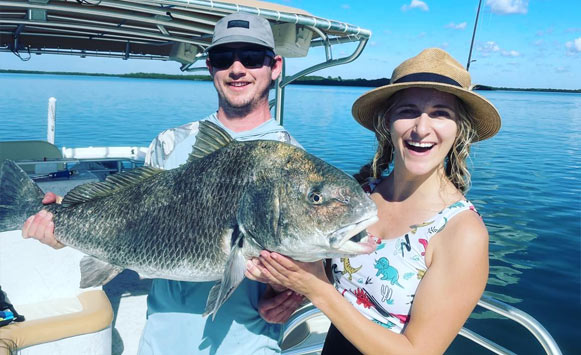
Oyster bars attract bait and give fish a hard edge to hunt. They can produce redfish, sheepshead, black drum, snapper, and the occasional surprise. They also eat hooks with tremendous confidence.
Fish the current-facing side first, then the downstream edge where food may sweep past. Use enough weight to keep a bait near the bottom without turning the presentation into an anchor. Check your leader often because oysters can fray line quickly.
Keep Your Approach Quiet
Backwater fishing rewards a little stealth. In shallow water, sound and pressure travel well. Slamming hatches, dropping coolers, stomping across the deck, or running a boat too close to a shoreline can send fish to the next county.
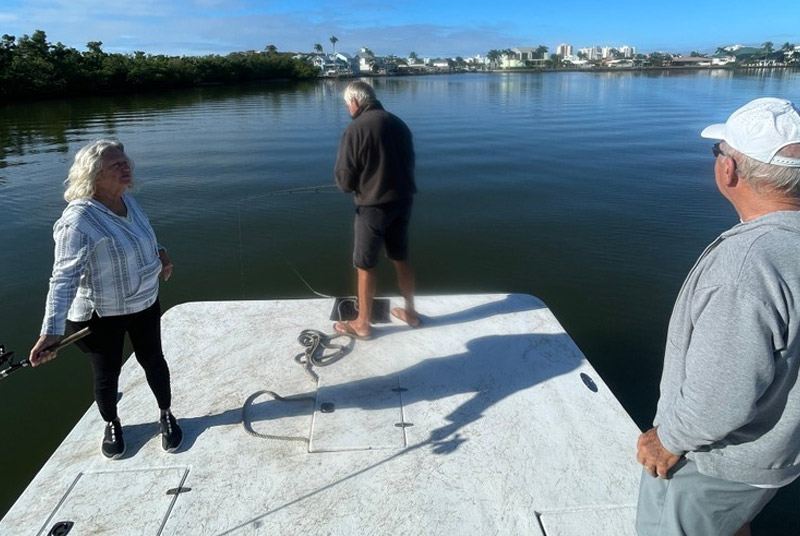
Ease off plane well before you reach a likely area. Use a trolling motor, pole, or controlled drift when conditions allow. Keep casts purposeful, and avoid throwing directly on top of visible fish. Lead them far enough that your bait can settle and look natural as they approach.
This is especially true for snook and redfish in clear water. They may be feeding aggressively one minute and turn suspicious after a boat passes too close. Patience is part of the gear list, even if it does not fit in the tackle box.
Match the Bait to What Fish Are Eating
Live shrimp is a reliable starting point for newcomers because many backwater species will eat it. It can tempt trout, redfish, snook, snapper, sheepshead, and more. A small circle hook, light leader, and just enough weight to reach the proper depth often do the job.
Live pilchards, threadfin herring, pinfish, and finger mullet can be excellent when larger predators are active. The right choice depends on the season, water clarity, and what you see around the boat. If mullet are pouring through a creek mouth, a mullet-pattern lure or appropriately sized live bait makes more sense than presenting something tiny and unrelated.
Artificial lures are effective and fun when worked with intention. Soft plastic paddletails can cover water along grass edges. Jerk baits work well around potholes and mangroves, particularly when fish are shallow. Topwater plugs can draw spectacular strikes at first light or late in the day, though they are not always the best tool when fish are holding deep or the wind has the surface chopped up.
The trade-off is simple: live bait often gives beginners more margin for error, while artificials can help experienced anglers search efficiently and trigger reaction bites. Neither is magic. A well-presented bait in the right place beats a fancy lure in empty water every time.
Use Tackle That Fits the Backcountry
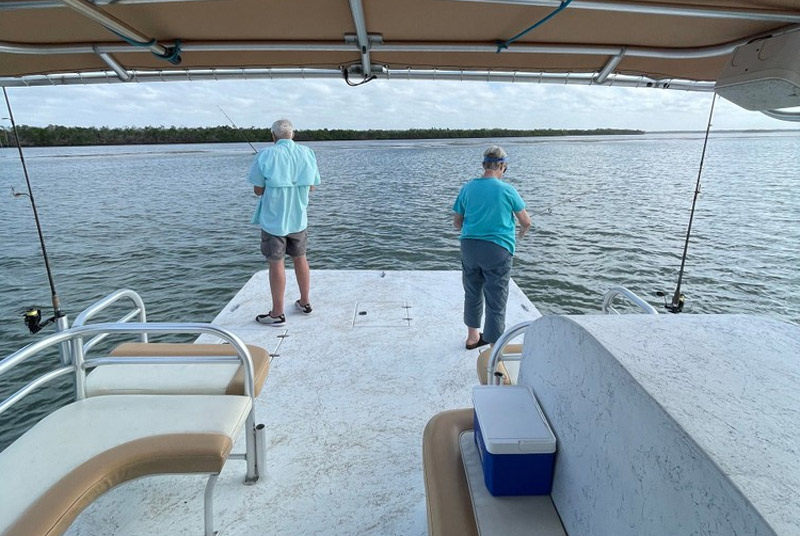
A medium-light to medium spinning outfit is a practical all-around choice for many Southwest Florida backwater species. It casts light baits well and still has enough backbone for a strong snook that decides the mangroves are home base. Braided line with a fluorocarbon leader offers sensitivity and casting distance, while the leader provides some protection around rough mouths and structure.
Leader size should match conditions. Clear water and wary trout may call for lighter leader, while snook near oysters or mangrove roots demand something tougher. If you are repeatedly getting broken off, do not keep making the same cast with the same setup and hope the fish develops better manners. Increase leader strength, adjust the angle, or move the fish away from cover before applying pressure.
A landing net, dehooking tool, sunscreen, drinking water, and polarized sunglasses are equally useful additions. Florida sunshine is part of the experience, but it is not a substitute for hydration.
Handle Fish With Care and Know the Rules
Backwater fishing is better when the resource stays healthy. Many popular species have seasonal closures, size limits, slot limits, and bag limits that can change. Check current Florida regulations before your trip, particularly for snook, redfish, trout, and any species you plan to keep.
If you release a fish, keep it in the water when possible, support it horizontally, and avoid squeezing its belly or hanging it vertically by the jaw. Use wet hands before handling it. For fish that are deeply hooked or struggling, a quick release is far more valuable than a photo session that lasts through three costume changes.
Respect the habitat as well. Avoid running across seagrass beds, give wading anglers and other boats room, and never treat mangrove shorelines as a place to leave line, plastic, or bait containers. The backwater is a nursery, a feeding ground, and a pretty remarkable office for anyone lucky enough to spend a day there.
Let Local Knowledge Shorten the Learning Curve
Every tide cycle looks a little different depending on wind, rainfall, water temperature, and season. A cold front may push fish into deeper, warmer water. Summer heat may make early mornings and late afternoons especially comfortable and productive. Heavy rain can change salinity in creeks and shift where fish hold.
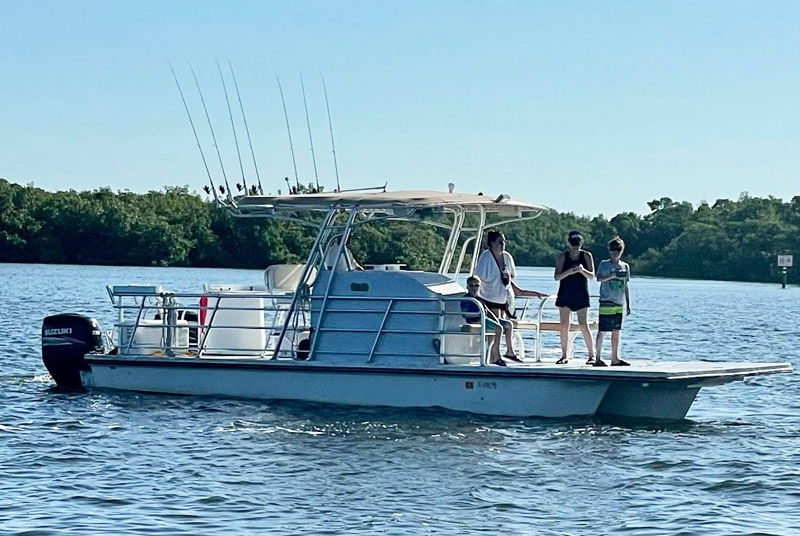
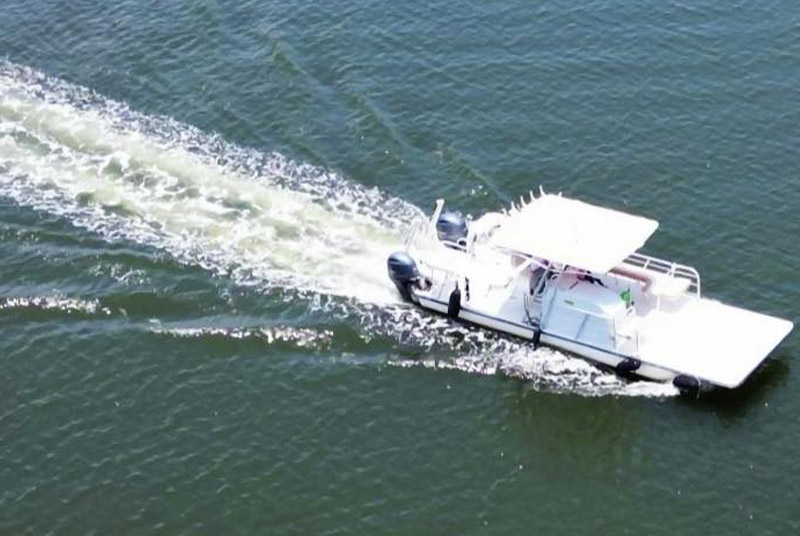
That is why a guided trip can be a smart first step for visitors and newer anglers. A knowledgeable captain can explain why one mangrove point is worth working while another is merely scenic, help you fish safely in shallow water, and tailor the approach to the day’s conditions. On a private backwater fishing charter with Good Time Charters, the goal is not just a bent rod – it is understanding the water well enough to recognize the next good opportunity.
Bring curiosity, listen for bait popping along the bank, and keep one eye on the tide. The fish may be the headline, but the moment a redfish pushes across a glassy flat or a snook explodes beside a mangrove root is the part of backwater fishing that tends to follow you home.