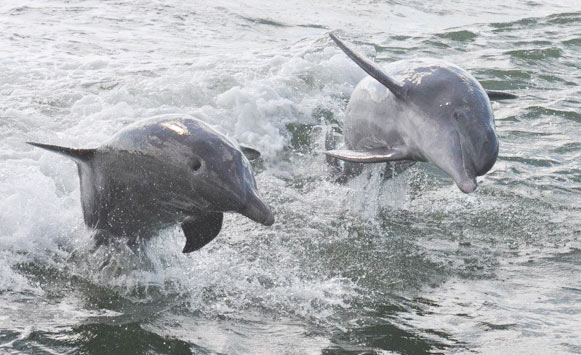
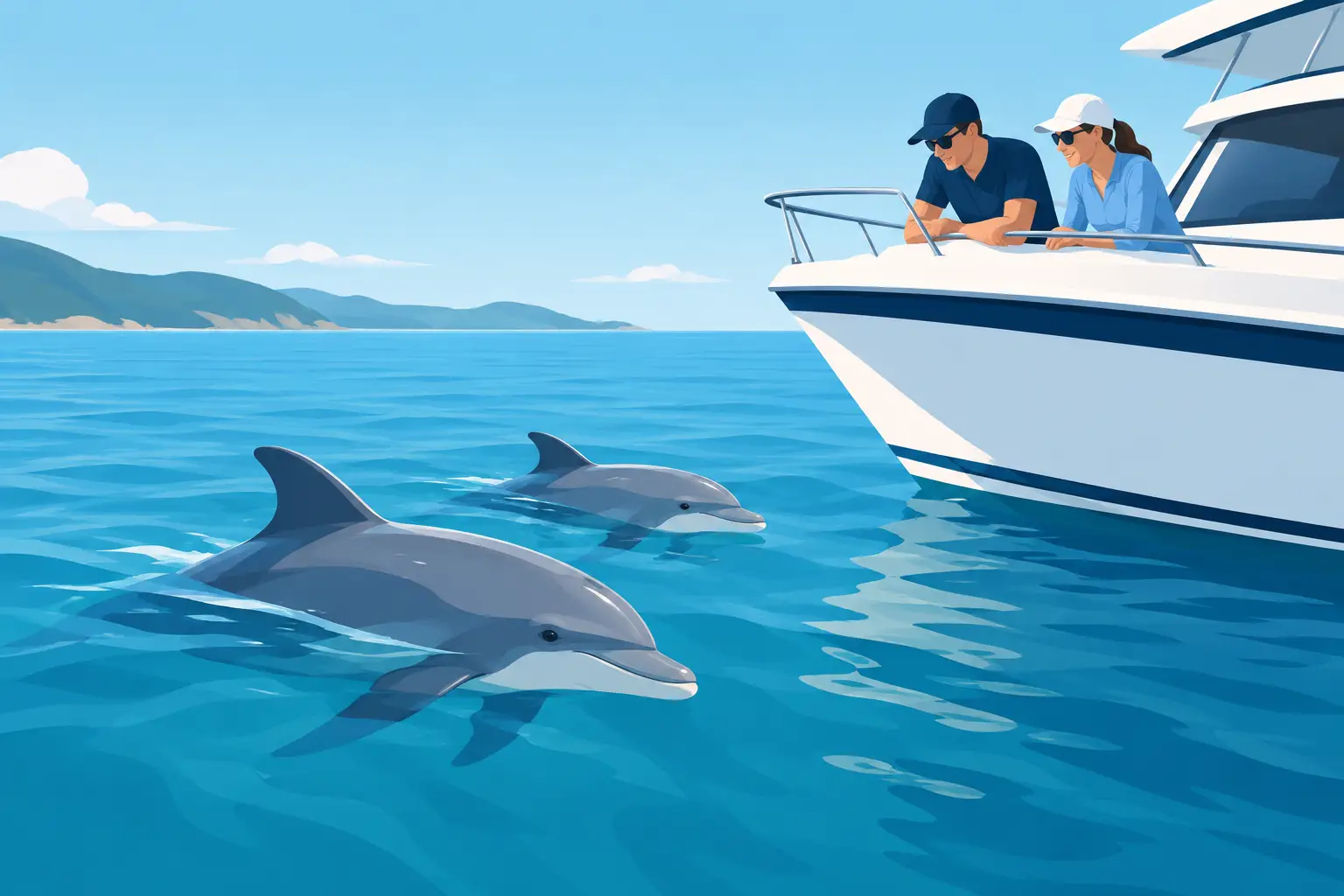
A dolphin suddenly appears off the bow, arcs through the wake, and seems to look straight at everyone on board. It is one of those classic Southwest Florida moments that can turn a pleasant boat ride into a lifelong vacation memory. But can dolphins approach boats on their own? Absolutely. The better question is how boaters should respond once they do.
Wild bottlenose dolphins are curious, capable animals that regularly travel through the same coastal waters as boats. They may swim near a vessel, surf its pressure wave, investigate activity around a dock, or pass alongside while following fish. Seeing one close to the boat is exciting. It is also a reminder that the dolphin, not the passenger, gets to decide how close the encounter becomes.
Can Dolphins Approach Boats Naturally?
Yes. Dolphins can and do approach boats without being invited, especially in protected coastal waterways, bays, and passes where people and marine life share the same routes. Around Fort Myers Beach and Estero Bay, bottlenose dolphins often move through shallow waters in search of mullet, pinfish, ladyfish, and other prey.
A moving boat creates a bow wave and a pressure wave along its hull. Some dolphins choose to ride these waves because it can be playful, stimulating, or simply an efficient way to travel. From the deck, it may look like they are putting on a show. In reality, they are making their own choices, on their own schedule.
Dolphins may also come near a boat because prey is nearby. A school of fish pushed toward the surface can attract diving birds, dolphins, and the attention of every person holding a camera. This is why wildlife encounters often feel sudden. The dolphin was likely interested in lunch, not in the boat itself.
Curiosity has limits, though. A dolphin that approaches is not asking to be touched, fed, followed, or surrounded. It is still a wild marine mammal, even when it is close enough to make eye contact.
Why Dolphins Ride Bows and Wakes
Bow-riding is one of the most recognizable dolphin behaviors boaters see. A vessel pushes water aside as it moves, creating waves that dolphins can use to glide with less effort. Think of it as a moving current they may choose to use for a few seconds or a few minutes.
Not every dolphin does it, and not every boat creates the same conditions. Speed, hull shape, water depth, the dolphin’s age, and what the pod is doing all matter. A group that is actively feeding may ignore a boat altogether. Mothers with calves may be more reserved, and resting dolphins need room even if they seem calm at the surface.
That distinction matters because dolphins do not need a boat to have a good day. The goal is not to make them come closer. The goal is to enjoy the privilege of seeing them without changing their natural behavior.
The Right Response When Dolphins Come Close
The safest response is calm, predictable boating. If dolphins voluntarily begin riding near the bow or wake, avoid sudden turns, sharp acceleration, or abrupt stops that could put them in harm’s way. Keep a careful lookout, especially if calves are present. A calf may surface unexpectedly close to its mother or slightly behind the group.
Do not steer toward dolphins to create an encounter. Give them plenty of room, reduce speed when conditions call for it, and let them choose whether to continue alongside the vessel or move away. Federal wildlife guidance generally recommends staying at least 50 yards from dolphins whenever possible. In narrow channels or busy waterways, that may not always be practical, but intentional crowding is never the answer.
If a dolphin is swimming under or very close to the boat, ease off the throttle carefully and maintain awareness of its direction. Never try to outmaneuver it for a better photo. Dolphins are fast, but they cannot predict every decision a boater makes.
Passengers can help, too. Keep arms, legs, and hands inside the boat, particularly when a dolphin is riding the bow. A close encounter may feel friendly, but reaching toward a wild animal creates risk for both the person and the dolphin. The best photos usually come from watching quietly and letting the moment unfold.
Do Not Feed, Touch, or Call Dolphins In
Feeding dolphins is one of the fastest ways to turn a beautiful wildlife sighting into a dangerous pattern. When dolphins associate boats with handouts, they may approach more aggressively, linger around fishing lines, or teach the behavior to their calves. That puts them at greater risk of injury from propellers, hooks, discarded line, and hostile encounters with people.
Feeding or attempting to feed wild dolphins is also prohibited under federal marine mammal protections. The same common-sense rule applies to tossing bait, fish scraps, or anything else into the water to get their attention. Fish-cleaning areas and busy docks can unintentionally teach dolphins that people are a food source, which is exactly what responsible boaters should avoid.
Touching is not kind, either. Dolphins have sensitive skin, and human contact can disrupt their behavior or expose them to pathogens. Calling, splashing, or revving an engine to make them surface may seem harmless from the deck, but it can interrupt feeding, nursing, resting, or travel.
A respectful encounter is wonderfully simple: watch, photograph from a reasonable distance, and let the dolphin leave whenever it chooses.
Be Extra Careful Around Calves, Fishing Gear, and Shallow Water
A small dolphin closely shadowing a larger one is usually a calf with its mother. This is a time to give the pair even more space. Calves need to surface frequently, nurse, learn feeding techniques, and stay connected with their mothers. Extra boat traffic or attention can add stress at a vulnerable stage of life.
Anglers should also pay close attention when dolphins are nearby. Never cast directly toward them or leave bait unattended where dolphins can grab it. If a dolphin begins investigating a line, avoid jerking the rod or escalating the situation. Carefully retrieve the gear when possible and move away if the dolphin continues to show interest.
In Southwest Florida’s shallow backwaters, there is another consideration: manatees. A captain scanning for dolphin fins should also be watching for manatee noses, backs, and swirl marks. Slow, observant boating protects every animal using these waters, including birds resting on sandbars and sea turtles surfacing briefly before slipping back below.
When a Dolphin Sighting Needs a Call
Most dolphin sightings are normal and need nothing more than respectful observation. But a dolphin that appears entangled, stranded, injured, unusually lethargic, or persistently circling a boat may need professional help. Keep your distance, note the location, and contact the appropriate local wildlife response authority rather than trying to intervene yourself.
Do not attempt to cut fishing line from an animal, push it back into deeper water, or tow it. Good intentions can cause further injury and make rescue work more difficult. Clear information from boaters, including the animal’s location and visible condition, is often the most useful first step.
A Better Wildlife Encounter Starts With Patience
The most memorable dolphin moments are rarely the ones people force. They are the quiet ones: a fin breaking the glassy water near a mangrove shoreline, a mother and calf traveling together, or a few dolphins slipping into a boat’s wake before continuing down the bay.
At Good Time Charters, naturalist-led outings are built around that kind of encounter – exciting, educational, and always on the wildlife’s terms. Bring a camera, keep your expectations flexible, and give dolphins the space to remain exactly what makes them so remarkable: wild.