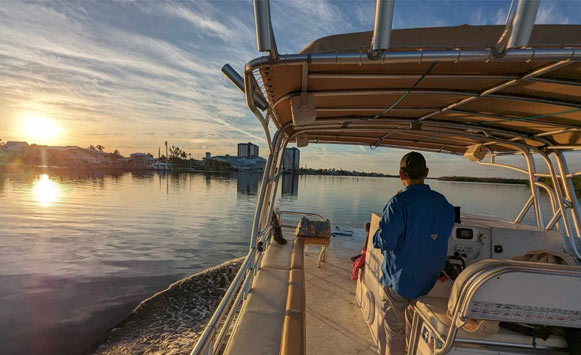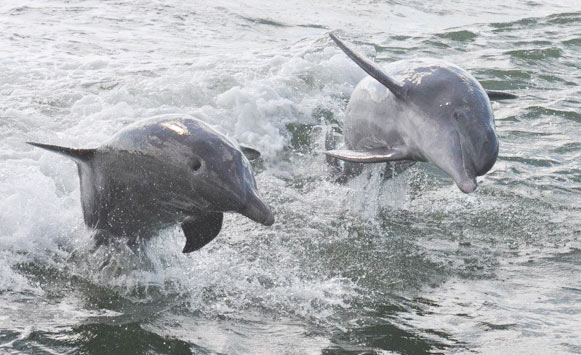
A dolphin surfaces beside the boat, a roseate spoonbill flashes pink over the mangroves, and someone spots a sand dollar near the tide line. Those moments are not random. This Florida marine habitats guide helps you read the water around Southwest Florida and understand why wildlife gathers where it does.
From Fort Myers Beach, a short ride can move you through several entirely different ecosystems: protected estuaries, mangrove shorelines, broad seagrass flats, oyster reefs, sandy barrier islands, and open Gulf water. Each habitat has its own cast of characters, its own rhythm, and its own role in keeping the coast alive.
Florida Marine Habitats Guide: Start With the Estuary
An estuary is where freshwater flowing from rivers and creeks mixes with saltwater from the Gulf. Estero Bay and nearby back bays are classic examples. The water may look calm and simple from the deck of a boat, but it is one of the busiest nurseries on the coast.
Young snook, redfish, mullet, shrimp, crabs, and countless small baitfish use sheltered estuary water as a place to feed and grow. Those smaller animals, in turn, draw larger fish, wading birds, dolphins, and anglers. If the water has a little current, a good edge between shallow and deeper water, and bait flickering at the surface, the wildlife often gets the memo before people do.
Estuaries can look brown or green rather than postcard-blue, especially after rainfall. That is not automatically a bad sign. Tannins from vegetation, suspended sediment, and natural plankton can all affect water color. What matters more is the overall condition of the water and the life using it.
Mangrove Shorelines: Florida’s Coastal Workhorses
Mangroves are the tangled, salt-tolerant trees lining many Southwest Florida islands and shorelines. They are not just scenic backdrops for a dolphin photo. Their root systems provide hiding places for juvenile fish and crabs, while their branches offer nesting and resting spots for herons, egrets, pelicans, ospreys, and other birds.
The three common Florida mangroves are red, black, and white mangroves. Red mangroves are easiest to recognize from the water because of their arched, prop-like roots. Black mangroves often have small upright breathing roots called pneumatophores, which look like dark pencils poking from the mud. White mangroves usually grow a little farther inland and have rounded leaves.
Mangroves also protect the shoreline. Their roots trap sediment and soften wave energy, which can reduce erosion during everyday tides and rough weather. That protection comes with a trade-off: mangrove shorelines are delicate. Running a boat too close, dropping an anchor into roots, or stepping into a nesting area can do more harm than visitors realize.
For wildlife watching, give mangroves room. Cruise slowly, keep voices low near rookeries, and let birds choose whether they stay or fly. A great sighting is never improved by making an animal uncomfortable.
Seagrass Flats: The Underwater Meadow
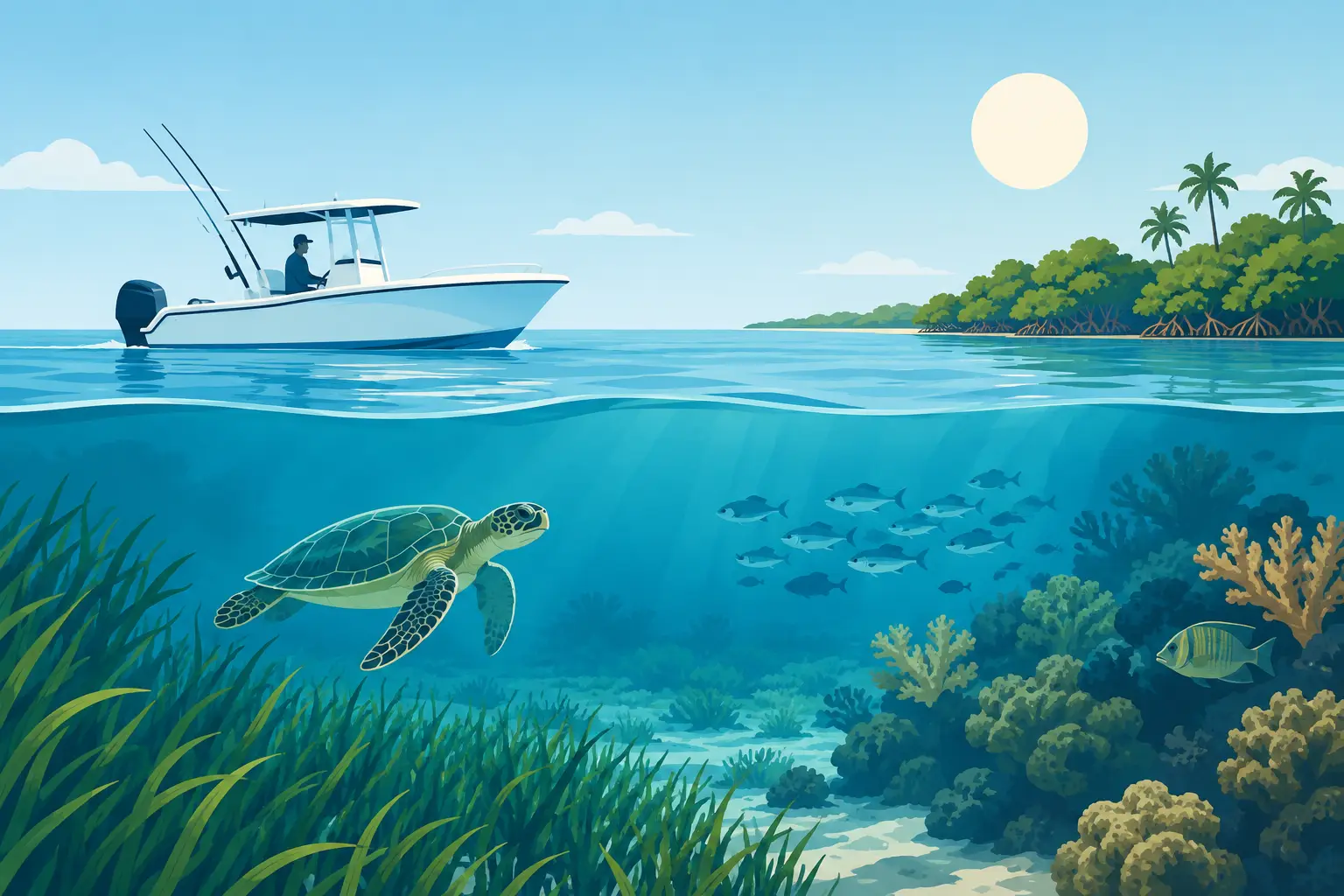
Seagrass is often mistaken for seaweed, but it is actually a flowering plant with roots, leaves, and seeds. In clear, shallow water, healthy seagrass beds form broad underwater meadows that support an astonishing amount of life.
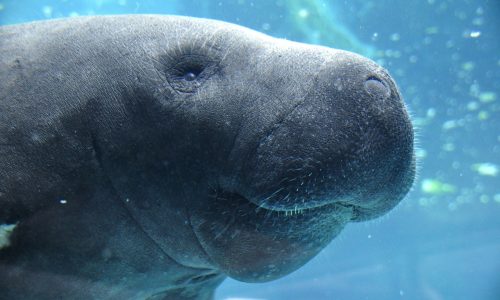
Fish such as spotted seatrout, pinfish, juvenile snapper, and redfish feed and hide among the blades. Sea turtles may graze there. Manatees also rely on submerged vegetation, although they are opportunistic feeders and move through a variety of coastal waters. Stingrays, horseshoe crabs, and small invertebrates are commonly found on or near the flats.
Seagrass needs sunlight, so water clarity matters. Too much sediment, nutrient pollution, or algae can block light and weaken the meadow. Boat propellers can cause another problem: prop scars. A prop scar is a trench cut through shallow grass when a vessel runs aground or powers through water that is too skinny for its draft.
The practical rule is simple: if you are unsure of the depth, slow down before you reach the flat. Trim up when appropriate, use marked channels, and pole or drift rather than powering across very shallow grass. The grass may grow slowly, and the scar can remain long after the boat has gone home.
Oyster Reefs: Rough Edges, Big Benefits
Oyster reefs may not win a beauty contest against a white-sand beach, but they are ecological heavyweights. Clusters of oysters create hard structure in an environment that is otherwise mostly mud, sand, and grass. Small fish and crabs use the nooks and crevices for shelter, while birds forage along exposed reef edges at low tide.
Oysters are filter feeders. As they pull water through their bodies to feed, they can help improve local water clarity. Reefs can also absorb wave energy and stabilize shorelines, much like living breakwaters.
From a boat, oyster bars deserve respect. They can appear just below the surface and can damage a hull or lower unit quickly, particularly around a falling tide. They are also sharp enough to ruin a barefoot beach walk in a hurry. Watch the tide, follow local knowledge, and avoid stepping on or removing live oysters from a reef.
Sandy Beaches and Barrier Islands
The beaches around Fort Myers Beach and the nearby barrier islands are more than a place to spread out a towel. The shifting sand supports ghost crabs, coquina clams, shorebirds, and nesting sea turtles. Just offshore, the surf zone can hold baitfish, jacks, snook, and feeding birds.
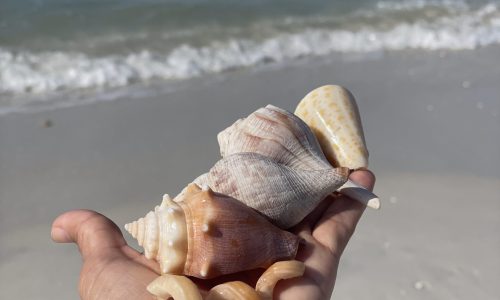
Shelling is often best after changing tides, storms, or strong winds have rearranged the sand. But a shell is not always an empty souvenir. If it has a live mollusk, hermit crab, or other creature inside, leave it where it belongs. The same goes for sand dollars that are dark, fuzzy, or moving – those are living animals, not beach decorations.
Sea turtle nesting season adds another layer of responsibility. Marked nests need wide clearance, and beach lights can disorient hatchlings. If you are out for a sunset walk, keep flashlights and phone lights pointed down and avoid disturbing any marked areas. A quieter beach is often a better beach for wildlife and people alike.
Open Gulf Water: Where Conditions Set the Scene
Beyond the passes, the Gulf can feel like a different planet. The water is generally deeper, the horizon opens up, and conditions change more quickly. Bottlenose dolphins may travel and feed here, while pelicans, terns, gulls, frigatebirds, and migrating species work the surface from above.
Look for clues rather than staring at empty water. A flock of birds repeatedly dipping toward one area may signal baitfish below. A line of ripples can mark a school of fish. A dolphin’s dorsal fin may appear once, then again several yards away as the animal travels. Wildlife sightings are never guaranteed, because these are wild animals with their own schedules, but knowledgeable observation dramatically improves your odds.
Wind, tide, season, and water temperature all influence what you see. Calm mornings can make manatee snouts or ray trails easier to spot in protected water. Afternoon sea breezes can stir the Gulf and send birds toward more sheltered feeding areas. Winter may bring different migratory birds, while warmer months often bring more active baitfish and summer storm patterns.
How to Be a Better Wildlife Guest
The best way to enjoy marine habitats is to leave them behaving naturally after you pass through. Keep a respectful distance from dolphins and manatees, never feed wildlife, and slow down in posted manatee zones. Feeding may feel friendly in the moment, but it teaches animals to approach boats and people, creating real risk for them.
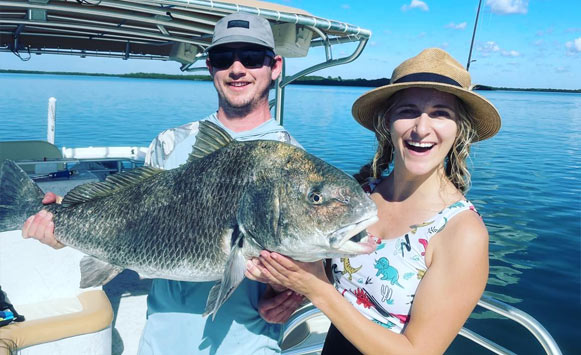
Pack out every scrap of trash, including loose plastic wrappers and fishing line. Monofilament can entangle birds, turtles, and fish, while floating plastic is easily mistaken for food. If you are fishing, use care when releasing fish and handle them with wet hands when possible to protect their slime coat.
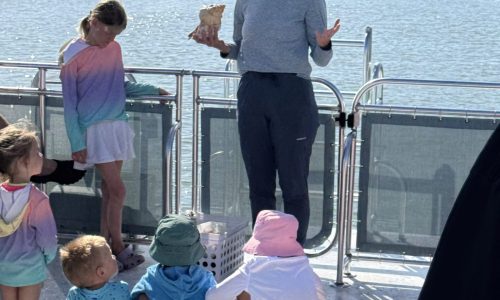
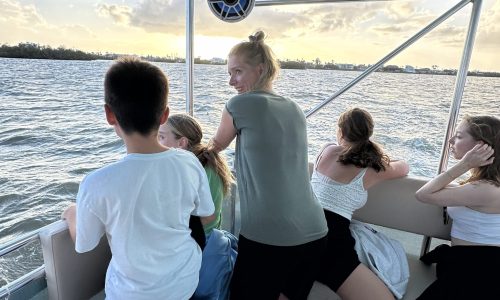
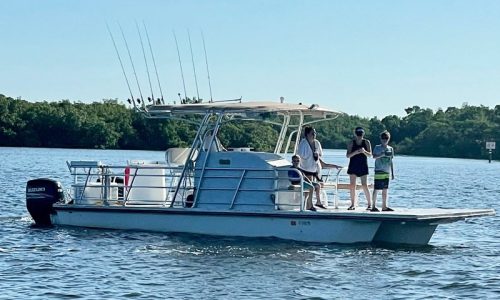
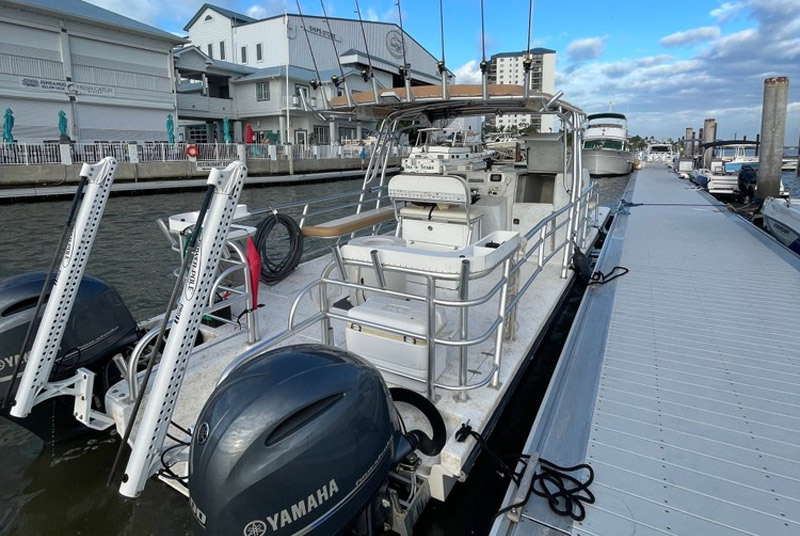
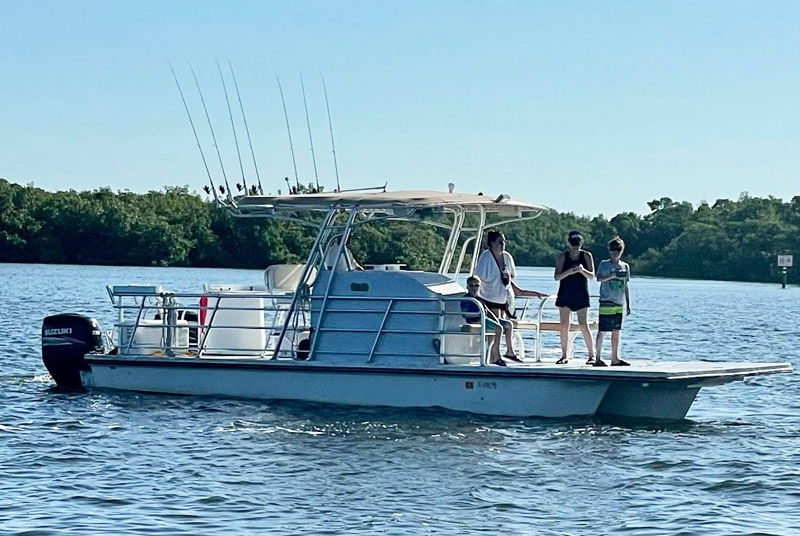
A naturalist-led outing can put all these habitats into context. At Good Time Charters, that means more than pointing out a distant bird and calling it a day. It means learning why a dolphin is hunting along a mangrove edge, why shells collect on one beach but not another, and why a grassy flat is worth protecting even when nothing seems to be breaking the surface.
The next time you see a quiet mangrove island or a patch of grass beneath clear water, pause before calling it scenery. There is a working coastal community under, above, and around it – and the more closely you look, the more of the story you get to bring home.