A Florida shelling day has a funny way of changing your pace. One minute you are walking the shoreline looking for a quiet place to set your chair, and the next you are bent over studying a tiny spiral as if it belongs in a museum. For beachcombers, the best shells to find in Florida are more than pretty souvenirs. They are clues to the animals and coastal habitats just offshore.
Southwest Florida is especially rewarding because the protected waters, mangrove islands, seagrass beds, and Gulf beaches support a remarkable variety of mollusks. Timing helps, of course. So does knowing what you are looking at before you fill a pocket with every white fragment in sight.
12 Best Shells to Find in Florida Beaches
Florida has hundreds of shell species, but these are the ones visitors are most excited to find – whether they are building a family collection, photographing nature, or simply enjoying a good old-fashioned treasure hunt.
1. Lightning Whelk
The lightning whelk is a Florida icon. Its creamy shell has a bold zigzag pattern that resembles a flash of lightning, and it can grow surprisingly large. Look closely at the opening: unlike most spiral shells, a lightning whelk is left-handed, meaning the opening sits on the left when the pointed end faces up.
These shells are common in sandy shallows, bays, and along Gulf beaches. A complete, unbroken adult shell is a great find, but even smaller juvenile whelks have that unmistakable pattern.
2. Florida Fighting Conch
A fighting conch has a sturdy, slightly flared shell with reddish-brown markings and a long opening. The name comes from the way males may shove one another during breeding season, not because they are looking to start trouble with your flip-flops.
They favor shallow sandy areas and seagrass flats. You may see a live conch moving across the bottom on its muscular foot. Admire it, take a photo, and let it keep on trucking.
3. Lettered Olive
The lettered olive is Florida’s state shell, and for good reason. It is sleek, glossy, and marked with delicate brown lines that can look like tiny handwritten letters. Its shape is smooth and bullet-like, often with a polished finish even before the tide has done much cleaning.
Olives burrow rapidly in wet sand, so the best chance of finding an empty one is after a tide change or along a fresh wrack line. Because they are active beach dwellers, check carefully for a living animal before taking one home.
4. Alphabet Cone
Alphabet cones are favorites with collectors because their markings appear to form dark, angular letters across a pale background. Each shell has its own pattern, which makes finding a clean one feel like pulling a tiny piece of coastal calligraphy from the sand.
They tend to show up on Gulf-facing beaches, especially after wave action has moved shell material toward shore. Cone snails are living predators, so the usual rule applies: only collect shells that are clearly empty.
5. Calico Scallop
A calico scallop brings color to a shell collection. Its fan-shaped shell may show pink, orange, purple, red, or brown rays, and no two seem to read the same. They are often smaller than visitors expect, but their color makes them easy to love.
Scallops can appear in large numbers among shell piles after a storm or strong tide. Most beach finds are single valves, meaning one half of the shell. A matching pair is less common and worth a closer look.
6. Sunray Venus
With bold radiating bands in warm brown, yellow, or purple tones, the sunray venus looks like it was designed for a beach postcard. It is a rounded clam shell with a smooth, substantial feel in the hand.
This is one of the more dependable finds on Florida’s Gulf beaches. Search near the high-tide line, where waves leave a natural sorting table of shells, drift material, and seaweed.
7. Banded Tulip
The banded tulip is a handsome spiral shell marked by broad, dark bands over a pale base. It has a pointed spire and a graceful shape that gives it a little more drama than the average clam shell.
Tulips live in shallow coastal waters and around estuaries. Their empty shells can wash ashore after rougher weather, although intact specimens are less common than smaller shells. Finding one is a good day on the beach.
8. Horse Conch
The horse conch is Florida’s largest shell and can grow to truly jaw-dropping sizes. It is typically orange, salmon, or peach inside, with a long, thick form built for life in the shallows. A large horse conch is the shell that makes everyone in the family stop and say, “Well, that is going in the photo.”
Because live horse conchs are protected in Florida, do not collect one with the animal inside. Large empty shells may also provide shelter for hermit crabs and other creatures, so give them a careful inspection before moving them.
9. Shark Eye
The shark eye has a chunky, rounded shape and a distinctive dark, circular center that inspired its name. It is the shell of a moon snail, a predator that hunts clams beneath the sand.
You may also find moon snail egg collars nearby. They look like grayish, sand-textured rings and are often mistaken for old rubber or plastic. They are a fascinating beach find, but leave them in place. They are part of the next generation.
10. Coquina
Coquinas are small, triangular clam shells painted in bright shades of pink, purple, yellow, orange, and blue-gray. One alone is charming. A handful arranged by color can look like beach confetti.
These little clams often live right at the water’s edge, tumbling in the wash and quickly burrowing back into wet sand. Collect only empty shells. If they are clicking, moving, or freshly paired together, they are likely alive and should stay put.
11. Auger Shell
Auger shells are narrow, high-spired shells that look like tiny drill bits. Their many whorls create a satisfying spiral, and they are often cream-colored with subtle brown patterning.
They can be easy to overlook because they blend into shell grit and sand. Slow down and scan carefully, especially after the tide has dropped. The smallest shells often reward the most patient beachcombers.
12. Jingle Shell
Jingle shells are thin, irregular, and often almost translucent. They may be yellow, orange, pink, or pale purple, with a shape that resembles a crumpled flower petal. Their name comes from the sound they make when several are shaken together.
They are delicate, so they are not always found intact. Still, their color and unusual shape make them a cheerful addition to a collection, even when they are imperfect. Nature is not running a gift shop, thankfully.
Where Shelling Is Best in Florida
The best shelling is usually not about finding the busiest beach. It is about finding the right conditions. Gulf-side beaches, barrier islands, quiet passes, and shorelines near seagrass-rich estuaries often receive a steady delivery of shells from nearby habitats.
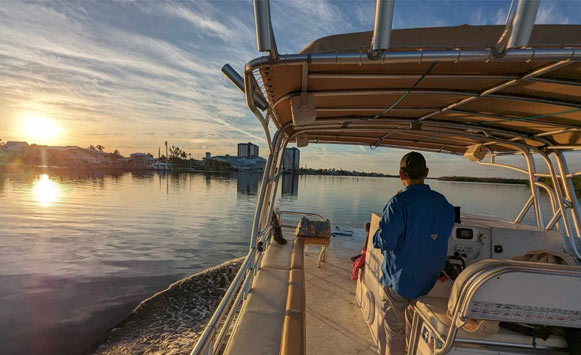
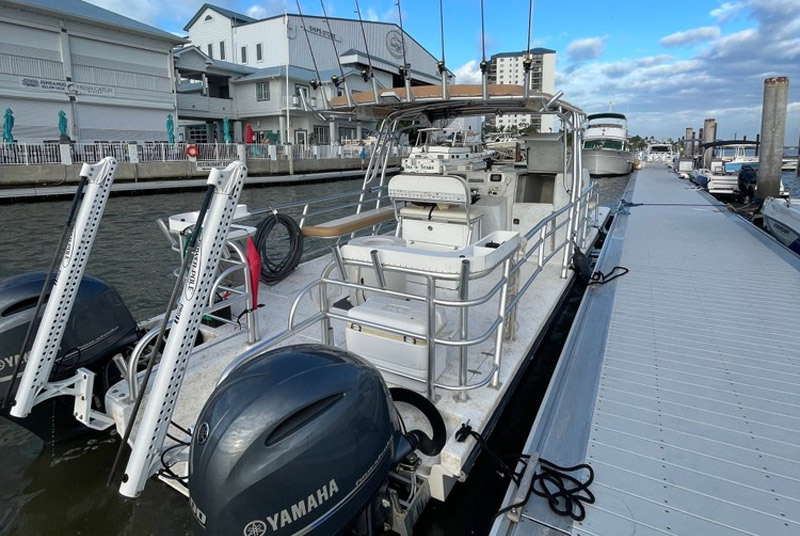
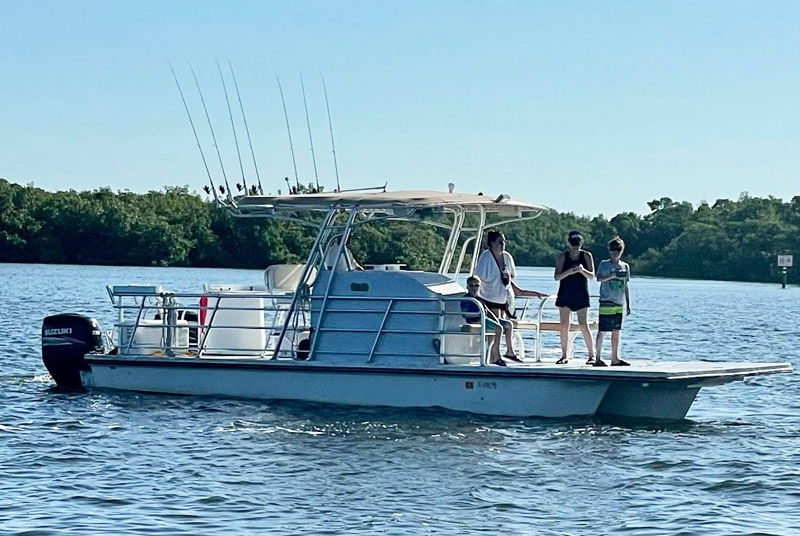
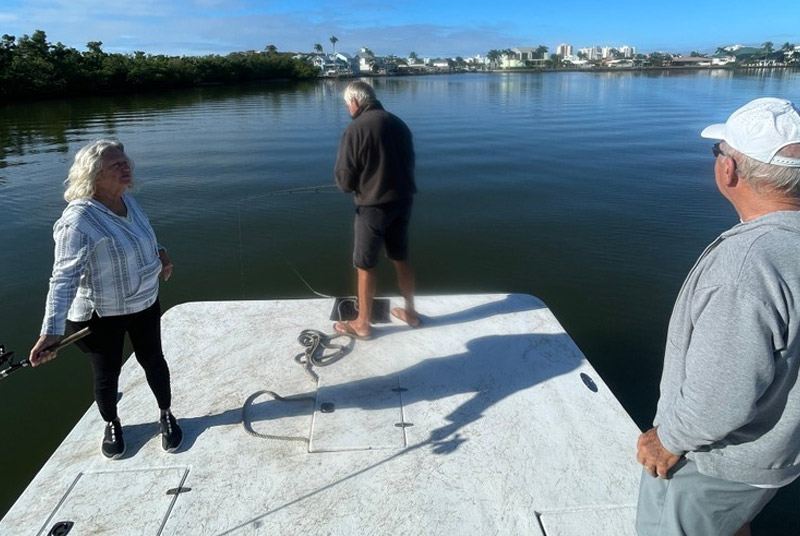
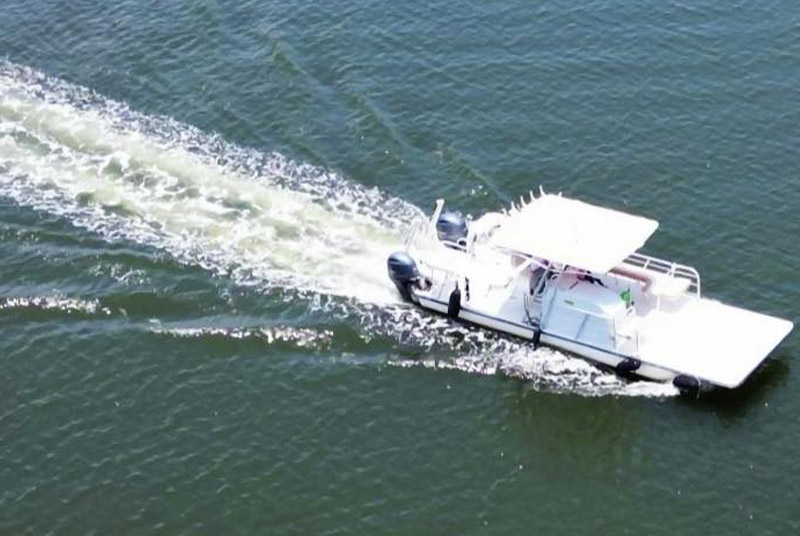
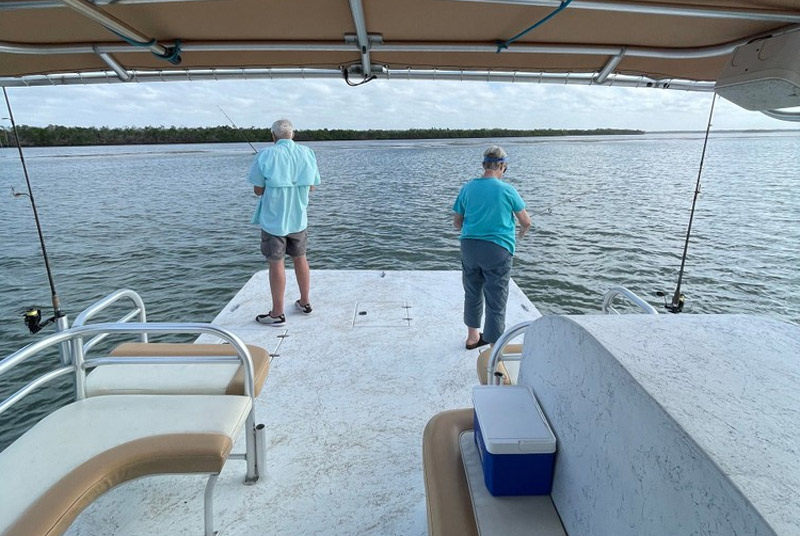
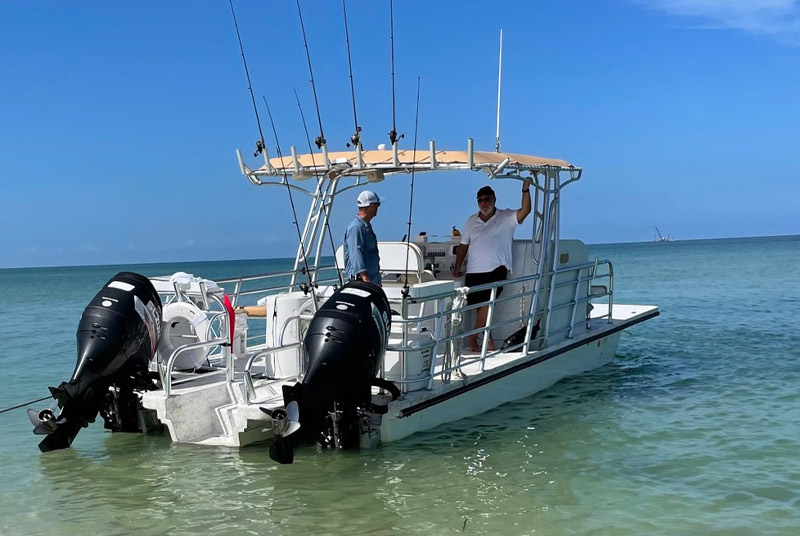
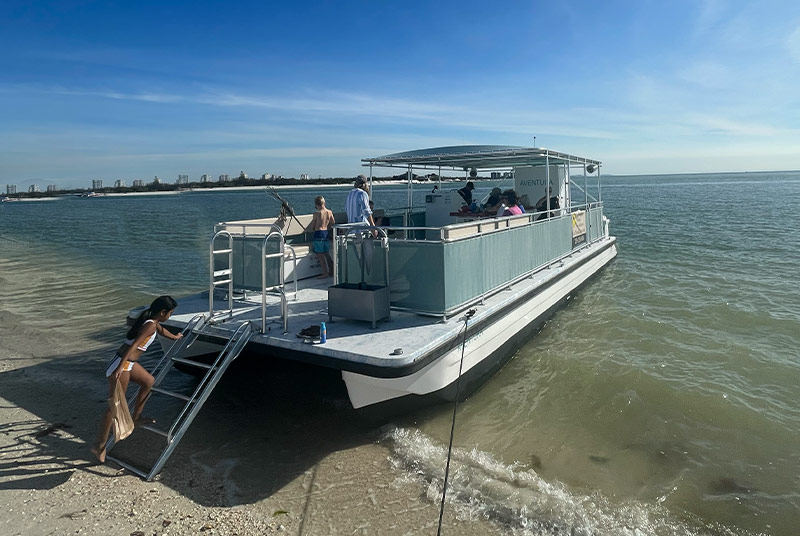
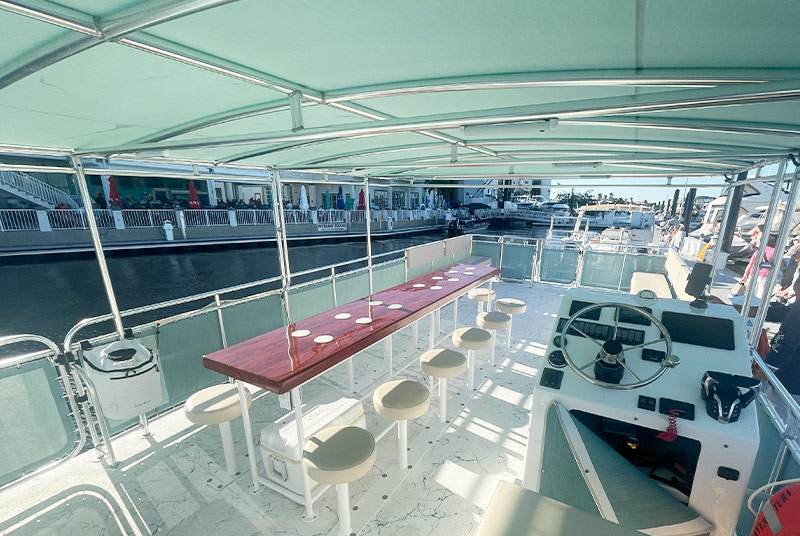
Around Fort Myers Beach, the waters of Estero Bay and the surrounding islands provide a mix of sandy bottom, tidal channels, and sheltered shoreline. A shelling outing by boat can reach less-trafficked areas where the shoreline has not been picked over by hundreds of other beach walkers before breakfast.
Low tide is a reliable starting point because it exposes more shell-rich sand. The hour or two after a receding tide can be excellent, particularly along the wrack line – the natural band of seaweed, seagrass, and shell fragments left by the water. After a moderate blow, conditions can be even better, though safety always comes first and the prettiest shell is never worth tangling with rough surf.
How to Collect Shells Responsibly
A great shell collection should not come at the expense of the living shoreline. Florida’s beaches are working ecosystems, and an empty shell can still be doing useful work as shelter, camouflage, or a future home for a hermit crab.
Start with the simplest shelling rule: take only shells that are empty. If you see a snail, clam, crab, worm, or any living tissue, return the shell exactly where you found it. Avoid collecting large quantities, and never remove shells from protected areas where collecting is restricted. Local, state, and refuge rules can vary by beach, so check the posted regulations where you are exploring.
It also helps to leave especially large or unusual shells alone when they are clearly being used by wildlife. A shell that looks like a prize to us may be a perfectly good apartment to a small creature.
Make the Hunt Part of the Adventure
Shelling becomes more memorable when you know the story behind what is in your hand. That patterned spiral may have lived in a seagrass bed. That colorful scallop may have filtered water offshore. That tiny coquina may have spent its whole life racing the waves at the beach’s edge.
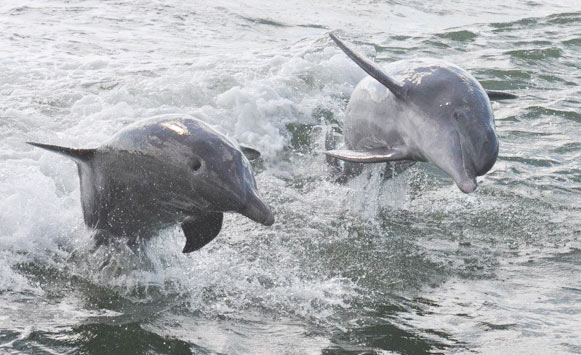
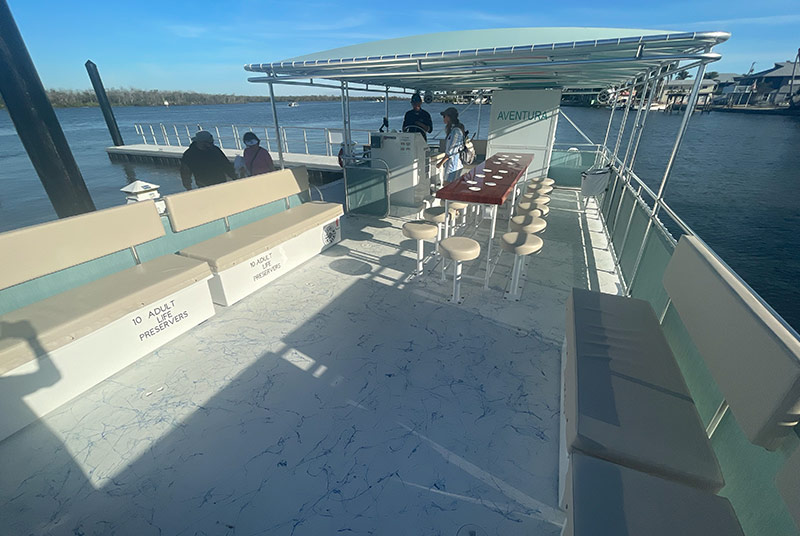
If you want to pair a relaxed shell hunt with local wildlife viewing and coastal natural history, a naturalist-led trip with Good Time Charters adds the part most beach walks cannot: the chance to see the habitats that produce these treasures from the water. Bring a mesh bag, wear water-friendly shoes, and leave room in your schedule for the shell that makes everyone stop mid-walk. It is out there, probably hiding beside something you almost stepped on.