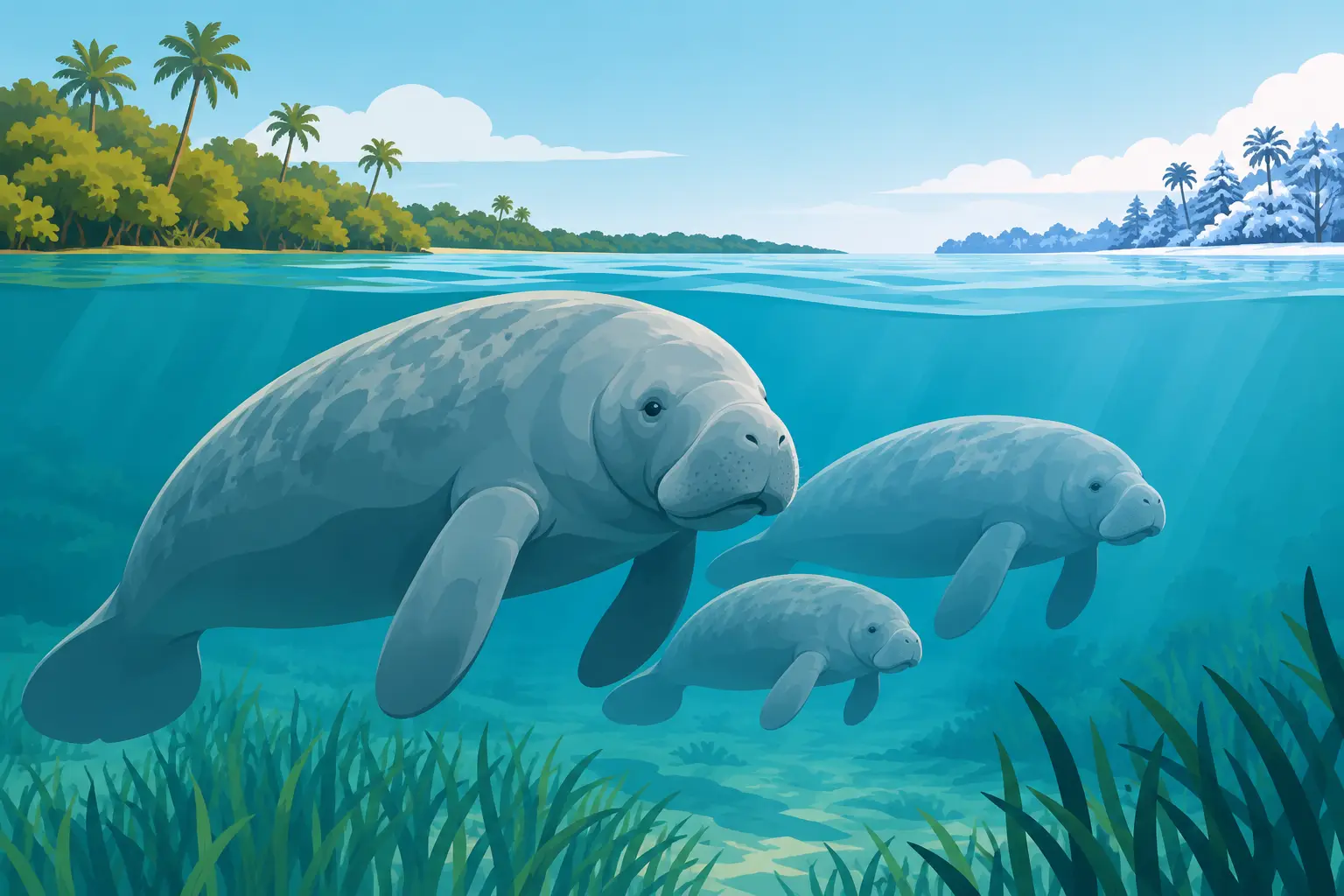
A manatee surfacing beside the boat can feel like a little bit of Florida magic. But if you visit Southwest Florida in the cooler months, you may notice something surprising: manatee sightings can change dramatically with the weather. So, do manatees migrate seasonally? Sort of – but not in the bird-flock-flying-south sense.
Florida manatees make seasonal movements based largely on water temperature. When cold fronts arrive, they head for dependable warm-water shelter. When spring and summer return, they spread back into bays, rivers, canals, seagrass flats, and coastal waterways to feed and travel. Their schedule is less about a date on the calendar and more about one urgent biological need: staying warm enough to survive.
Do Manatees Migrate Seasonally in Florida?
Manatees are often described as seasonal migrants, but their movements are better understood as a response to changing conditions. Unlike animals that follow a precise route at the same time every year, manatees adjust their travels according to water temperatures, available food, freshwater access, storms, and individual habits.
A healthy adult manatee has a large body, but it does not have much insulating fat. That makes cold water a serious problem. Extended exposure to water below about 68 degrees Fahrenheit can lead to cold stress syndrome, a potentially fatal condition that can weaken a manatee, suppress its immune system, and cause lesions or other health problems.
When temperatures fall, manatees gather at warm-water refuges. These can include natural springs, warm-water discharges from power plants, and certain sheltered waterways that stay warmer than surrounding coastal water. Some animals may travel significant distances to reach these sites, while others already live close enough to use them when a cold snap hits.
That means the answer is yes, manatees move seasonally, but no, every manatee does not follow the same migration path. Florida’s waterways are their neighborhood, pantry, highway, and winter shelter all rolled into one.
Why Winter Changes Where Manatees Go
Winter is the season when manatee behavior becomes most concentrated. A cold front can push animals out of open bays and shallow grass flats surprisingly quickly. They may travel into rivers, canals, and warm-water areas where conditions are more stable.
In Southwest Florida, the exact timing changes every year. A mild winter can keep manatees spread across a wider area. A sharp cold spell can cause a noticeable gathering near warmer water within days. Local guides and experienced boaters pay close attention to these shifts because wildlife activity is never on autopilot.
Natural springs are among the best-known winter refuges in Florida, especially farther north and inland. These springs maintain relatively steady temperatures year-round. Along developed portions of the coast, some manatees have also learned to use warm-water outflows. These places can become crowded during severe cold, which is a good reminder that a seemingly calm manatee resting near shore may be there because it has few safe options.
Manatees do not hibernate. They still need to surface for air, drink freshwater when they can find it, and conserve energy. Their winter routine simply becomes more focused on warmth and survival than on wandering through broad feeding areas.
Where Do Manatees Go During Warm Months?
Once waters warm in spring, manatees begin to disperse. Many return to coastal habitats, including estuaries, shallow bays, tidal creeks, and river systems. These places offer the aquatic vegetation manatees eat, along with access to freshwater sources.
A manatee’s diet is largely plant-based. They graze on seagrasses and other aquatic vegetation, and an adult can consume a substantial amount every day. Warm-weather habitat is not just a place to cruise around slowly and look adorable. It is essential feeding territory.
Summer also tends to bring more movement between connected waterways. Some manatees travel along Florida’s coastline, while others move in and out of inland rivers and canals. Mothers with calves may favor quieter, protected areas, though manatees can appear almost anywhere there is sufficient depth, food, and water access.
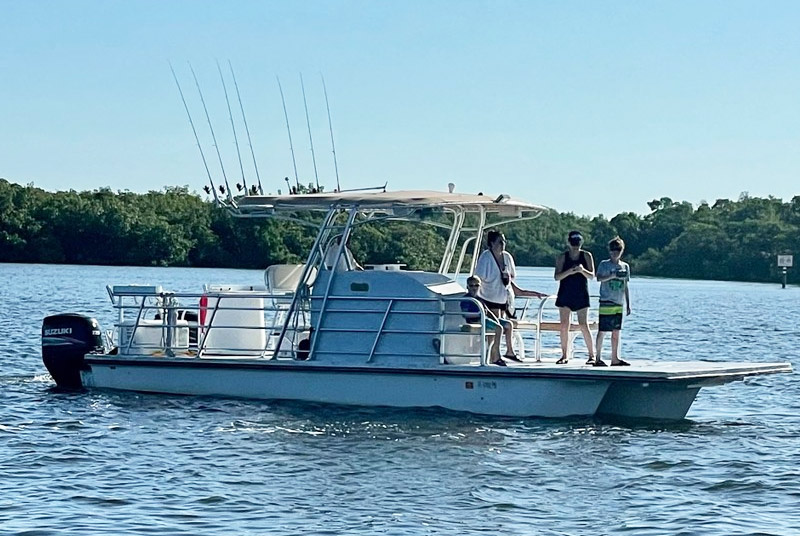
For visitors on the water near Fort Myers Beach, this is why wildlife sightings always come with a little honest suspense. Manatees are wild animals, not scheduled performers. One day they may be grazing in a sheltered back bay; another day, tide, weather, boat traffic, or food availability may have them somewhere else entirely.
Manatee Movements Are Not One-Size-Fits-All
Researchers have tracked individual manatees that return to the same winter refuge year after year. Others travel more broadly, sometimes crossing large stretches of coastline. Age, sex, health, learned behavior, and habitat conditions all influence where a particular animal goes.
Mothers teach calves where to find warm water, food, and safe travel routes. That learned knowledge matters. A calf may continue using familiar seasonal areas long after becoming independent.
There is also a major difference between a manatee shifting a few miles into a warm canal and one traveling hundreds of miles between summer and winter habitat. Both movements can be seasonal, but they are not identical. Calling every movement a migration is convenient, but it can make manatee behavior sound more predictable than it really is.
Weather is the wild card. Florida can have a warm January followed by a bitter week of cold fronts. During those sudden changes, manatees may alter their normal routines fast. That is one reason knowledgeable captains slow down, watch carefully, and treat posted manatee zones as more than a suggestion.
What Boaters Should Know During Manatee Season
Manatees can be difficult to spot. Their gray backs may barely break the surface, especially in murky water, low light, or wind chop. A swirl, a small snout, a paddle-shaped tail, or a smooth oval shadow may be the only clue that one is nearby.
Responsible boating protects manatees in every season, but extra awareness matters when animals are concentrated in warm-water areas or traveling through shallow channels. Follow posted speed zones, stay alert near docks and mangrove shorelines, and keep a sharp lookout in calm, shallow water.
If you see a manatee, give it room. Do not chase, corner, feed, or attempt to touch it. Manatees are protected wildlife, and close interactions can disrupt essential resting, nursing, or feeding behavior. The best wildlife encounter is one where the animal gets to choose what happens next.
There is a practical side to slowing down, too. Propeller scars are a painful reminder that manatees share busy waterways with people. Running at a safe speed gives boaters more time to see an animal and react. It also makes the whole experience better – nobody remembers a rushed ride as fondly as a quiet moment watching a manatee surface on its own terms.
When Is the Best Time to See Manatees?
There is no guaranteed manatee day, because wildlife has not read the vacation itinerary. Still, winter can create excellent viewing opportunities at established warm-water refuges, particularly during cooler periods. Summer and early fall can also be rewarding in coastal areas where seagrass, freshwater, and calm protected water attract manatees.
The best approach is to think beyond the season. Water temperature, recent weather, tide, habitat, and time of day can all affect what you see. A naturalist-led outing adds real value here, because a good guide is reading the conditions rather than simply hoping something pops up beside the boat.
At Good Time Charters, our crew loves the thrill of spotting wildlife, but we also enjoy explaining the why behind the sighting. Seeing a manatee is memorable. Understanding why it chose that stretch of water makes the moment even better.
A Seasonal Journey Worth Respecting
Manatees do not pack bags for winter, but they do make purposeful seasonal moves to find the warmth and food they need. Their travels tell a bigger story about Florida’s connected rivers, estuaries, springs, and coastal habitats – and about how quickly conditions can change for an animal that depends on all of them.
The next time you spot that unmistakable nose at the surface, take a moment, ease off the throttle, and let the manatee set the pace. Around here, that is often where the best stories begin.