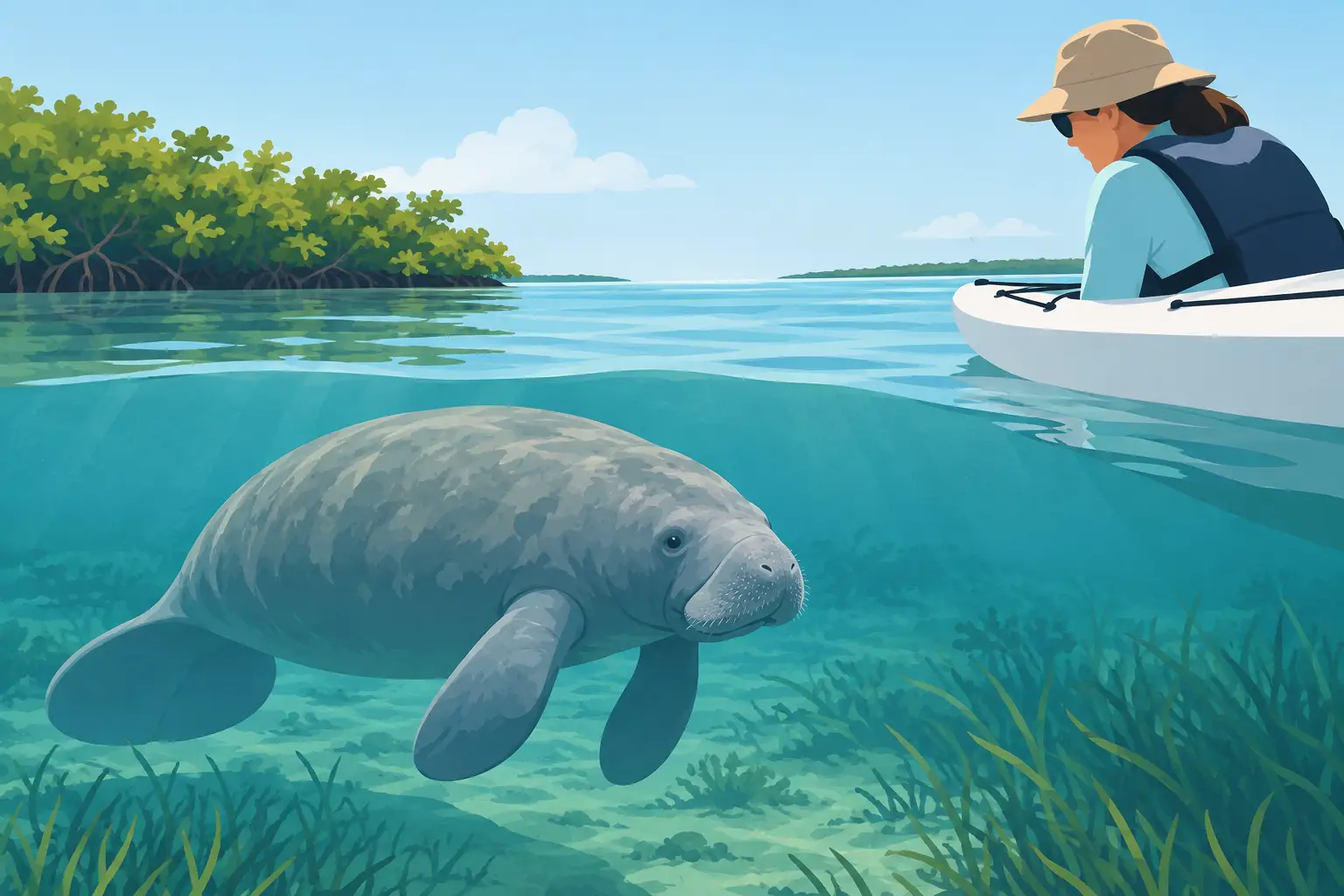
A manatee rarely announces itself with a splash. More often, you will notice a smooth gray back breaking the surface, a pair of nostrils taking a quick breath, or a broad swirl in quiet water that seems a little too deliberate to be a fish. Knowing how to spot manatees safely makes those moments more rewarding – and helps protect one of Southwest Florida’s most beloved wild neighbors.
Manatees are gentle, curious-looking animals, but they are not props for a vacation photo. They are protected wildlife with real needs: warm water, access to food, rest, and room to travel without being chased, crowded, or struck by a boat. The best sightings happen when people slow down, pay attention, and let the manatee set the distance.
Look for Clues Before You Look for a Manatee
Manatees can be surprisingly hard to see. Their gray skin blends into tea-colored backwaters, seagrass beds, mangrove shorelines, and sandy shallows. A little patience usually works better than scanning the water like you are looking for a dolphin leaping offshore.
Start by watching calm, protected water. Canals, marinas, mangrove-lined creeks, quiet bays, and warm-water areas can all be good habitat. In the Fort Myers Beach area, the calmer reaches around Estero Bay can offer excellent wildlife viewing conditions, especially when wind and boat traffic are low.
The most common clue is a “manatee footprint.” This is not a literal track. It is a smooth, round or oval patch of disturbed water left behind when a manatee moves just below the surface. Unlike a boat wake, which travels in a defined line, a footprint can look like a soft boil, swirl, or glassy circle that appears and fades.
Also watch for a nose. Manatees must surface to breathe, often every few minutes when resting and more frequently when active. You may see two nostrils rise briefly, followed by a small ripple. A back or paddle-shaped tail may appear too, but do not expect a full-body reveal. Good wildlife spotting is often a game of noticing small details.
How to Spot Manatees Safely From a Boat
The number-one rule on the water is simple: slow down before you think you need to. Manatees spend much of their time near the surface, particularly in shallow areas where boats may have limited room to maneuver. A vessel moving quickly can overtake an animal before the operator ever has a chance to react.
Observe posted speed zones and manatee protection signs every time. These zones are not decorative waterfront scenery. They are designed around places where manatees regularly feed, rest, travel, or gather during cooler weather. Even outside a marked zone, use extra caution in shallow, murky, or narrow water where visibility is limited.
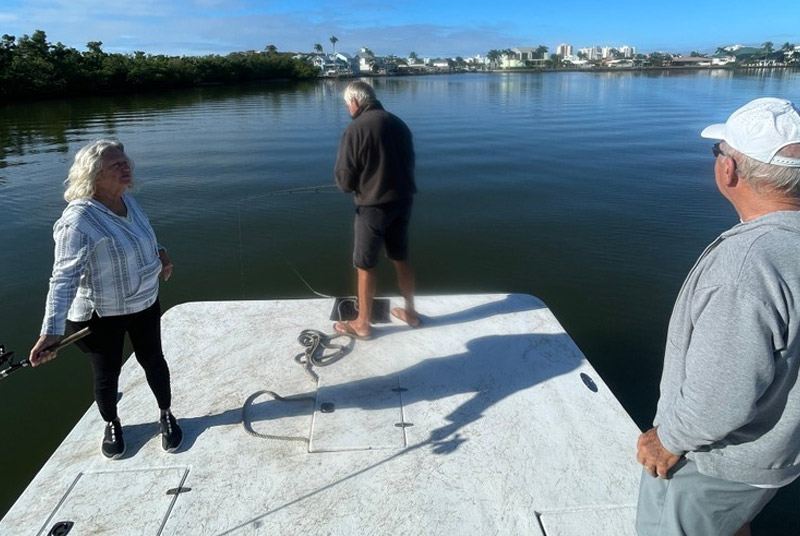
Keep a dedicated lookout at the bow when conditions call for it. The captain needs to focus on navigation, other vessels, markers, and changing tides. A second pair of eyes can spot subtle swirls or surfacing noses sooner. Polarized sunglasses can reduce glare on bright Florida days and make dark shapes beneath the water easier to notice.
If you see a manatee, ease off the throttle and allow the animal plenty of space. Never race alongside it, circle it, or position the boat to cut off its path. Shift to neutral if a manatee is very close and wait for it to move away on its own. Propeller scars are a sadly common sight on manatees, and careful boat handling can prevent another one.
This is also a good time to put the camera down for a moment. A quick photo is fine from a safe distance, but a sighting should never distract the person operating the boat. The best souvenir is seeing the manatee continue calmly on its way.
Give Them Space From Shore, Kayaks, and Paddleboards
A quiet kayak or paddleboard can make a manatee encounter feel wonderfully close. It can also make it easy to accidentally crowd an animal. Because your craft is nearly silent, a resting manatee may not realize you are nearby until you are already in its space.
If a manatee surfaces near you, stop paddling and let it choose what happens next. Do not follow it into shallow grass, block it against a shoreline, or drift directly above it. A manatee that changes direction repeatedly, speeds away, stays submerged longer than usual, or appears to avoid you is telling you it needs more room.
From docks and shorelines, the same rule applies: watch quietly. Avoid leaning over to touch a manatee that comes near a seawall or dock. Feeding, watering, touching, or trying to attract manatees changes their natural behavior and can put them in danger around boats and people. They may look like floating baked potatoes with flippers, but they are still wild animals.
Swimming with manatees is not a casual activity to improvise in coastal waters. Conditions, local rules, boat traffic, and the animal’s behavior all matter. When in doubt, enjoy the encounter from your vessel, kayak, dock, or shoreline rather than trying to make it a hands-on experience.
Learn the Difference Between Curious and Stressed Behavior
Manatees are often calm around people, but calm does not automatically mean they want company. A manatee may approach a boat, paddleboard, or dock because it is curious, because it is using the area as a travel route, or because it has become accustomed to human activity. None of those reasons is an invitation to interact.
A respectful encounter is one where the animal can continue feeding, resting, surfacing, and traveling normally. If your presence changes that behavior, create more distance. This matters especially around mothers and calves. A calf may stay closely alongside or behind its mother, and separating the pair with a boat or paddlecraft is dangerous.
Never assume a manatee is alone. If you see one, scan the area carefully for another surfacing animal, a calf, or subtle wakes nearby. Slow, deliberate movements protect the animal you spotted and the ones you have not seen yet.
Timing Matters, but Wildlife Never Runs on a Schedule
Manatees live in Southwest Florida waters year-round, although their movements change with water temperature, food availability, weather, and freshwater conditions. During cooler months, they may gather near warm-water refuges. In warmer weather, they can spread through bays, rivers, canals, and seagrass areas.
Early morning can bring quieter water and fewer boats, making surface clues easier to see. Calm days are usually better than choppy afternoons, when wind-driven ripples can hide a manatee’s breathing pattern. Still, there is no guaranteed manatee hour. Wildlife does not clock in for a shift just because your vacation schedule says 10:00 a.m.
That uncertainty is part of what makes a genuine sighting special. A naturalist-led cruise can improve your odds because an experienced crew knows the local habitat, tides, seasonal patterns, and the subtle signs that casual observers often miss. But the goal is never to force an encounter. It is to be in the right kind of place, moving at the right pace, with respect for what the water is willing to show you.
Help Kids Become Great Wildlife Watchers
Manatee sightings are a terrific chance to turn a boat ride into a family nature experience. Give children an easy job, such as watching for a round swirl, a small breathing snout, or a dark shadow in calm water. Remind them that a quiet voice and a still body can help everyone observe longer.
You can also explain why no touching is a kindness, not a disappointment. The animal gets to decide where it goes, what it eats, and how close it comes. That simple lesson travels well beyond one manatee sighting.
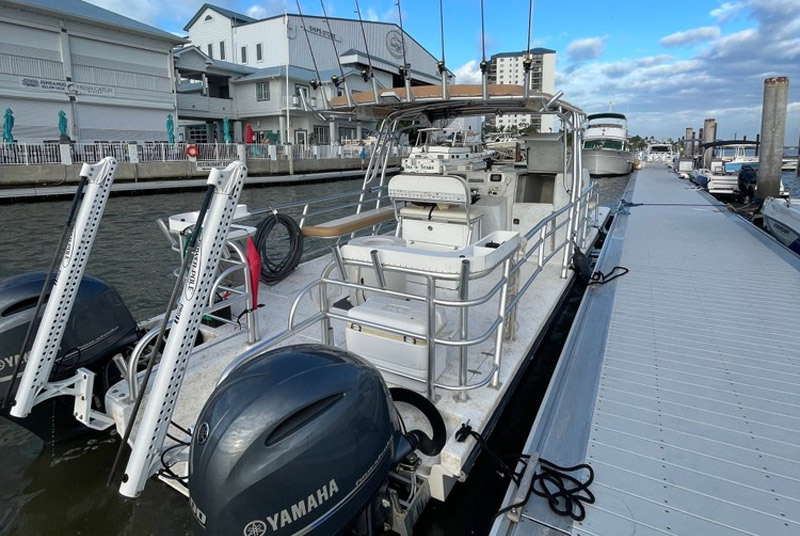
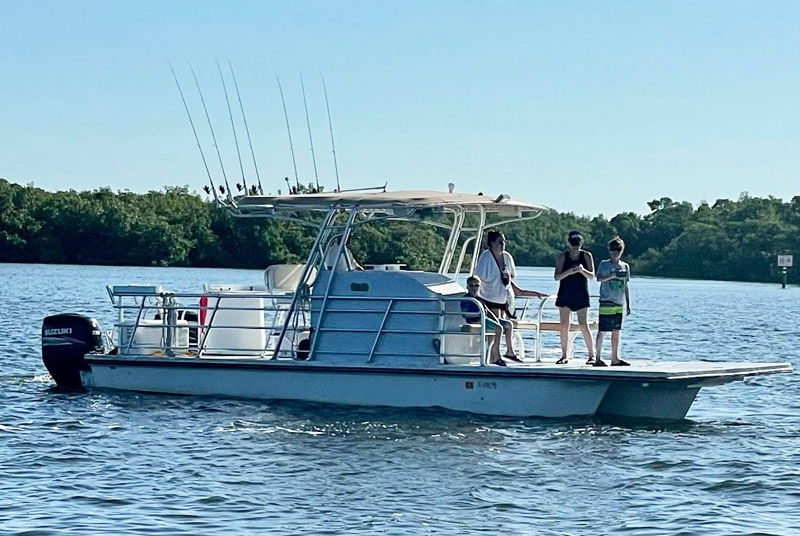
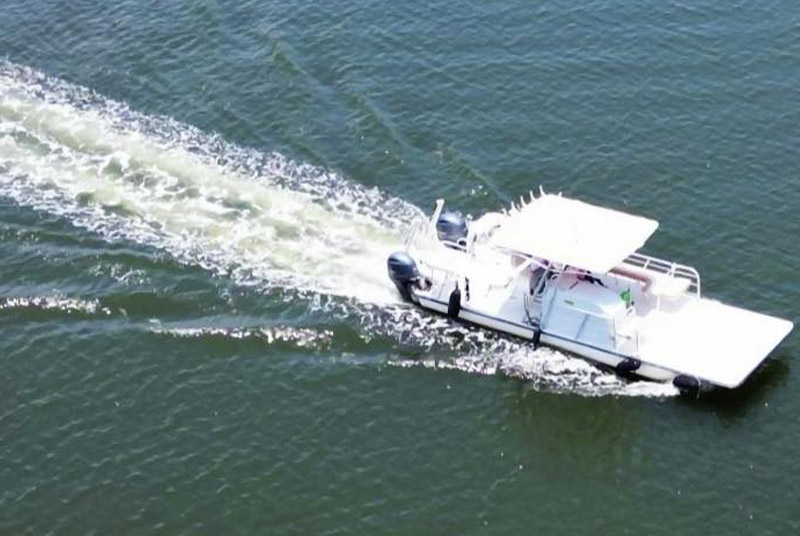
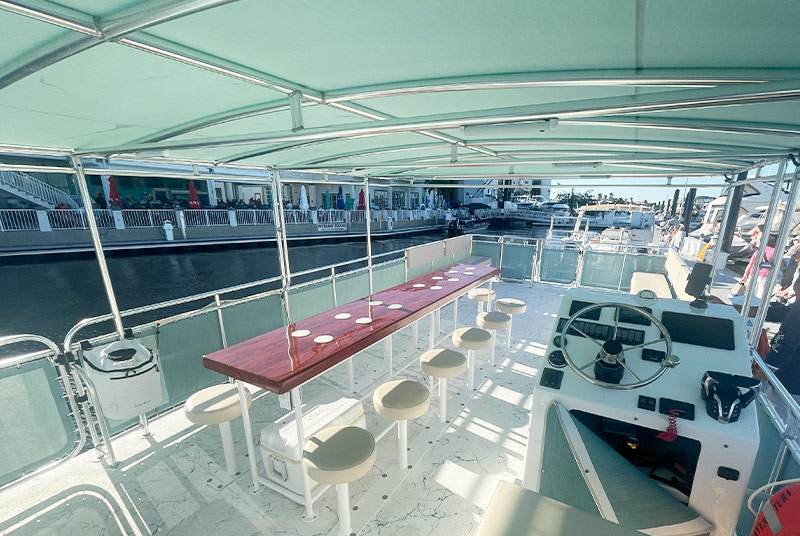
On a Good Time Charters wildlife outing, our naturalist-minded crew loves helping guests notice the details that make coastal waters feel alive – while keeping the experience respectful for the animals that call them home.
The next time a smooth circle appears beside a mangrove shoreline or a pair of nostrils pops up in a quiet channel, resist the urge to rush closer. Slow down, watch carefully, and give that manatee the open water it deserves. That is how a brief wildlife sighting becomes a good time for everyone.