A snowy egret lands at the edge of a mangrove flat, a brown pelican folds its wings beside the boat, and suddenly every white bird on the shoreline starts to look different. Learning how to identify coastal birds is less about memorizing a giant field guide and more about noticing a few reliable clues before the bird flies off, steals somebody’s bait, or disappears behind the next sandbar.
For visitors exploring Southwest Florida, birds are often the most visible wildlife on the water. Dolphins may make a memorable appearance, but herons, terns, osprey, and pelicans are working the coastline all day. Once you know what to watch for, every cruise through Estero Bay feels a little more like a wildlife scavenger hunt.
How to identify coastal birds: Start with silhouette
Before looking for tiny feather details, study the bird’s overall shape. This is especially useful from a moving boat, when lighting changes quickly and that bird is determined to face the wrong direction.
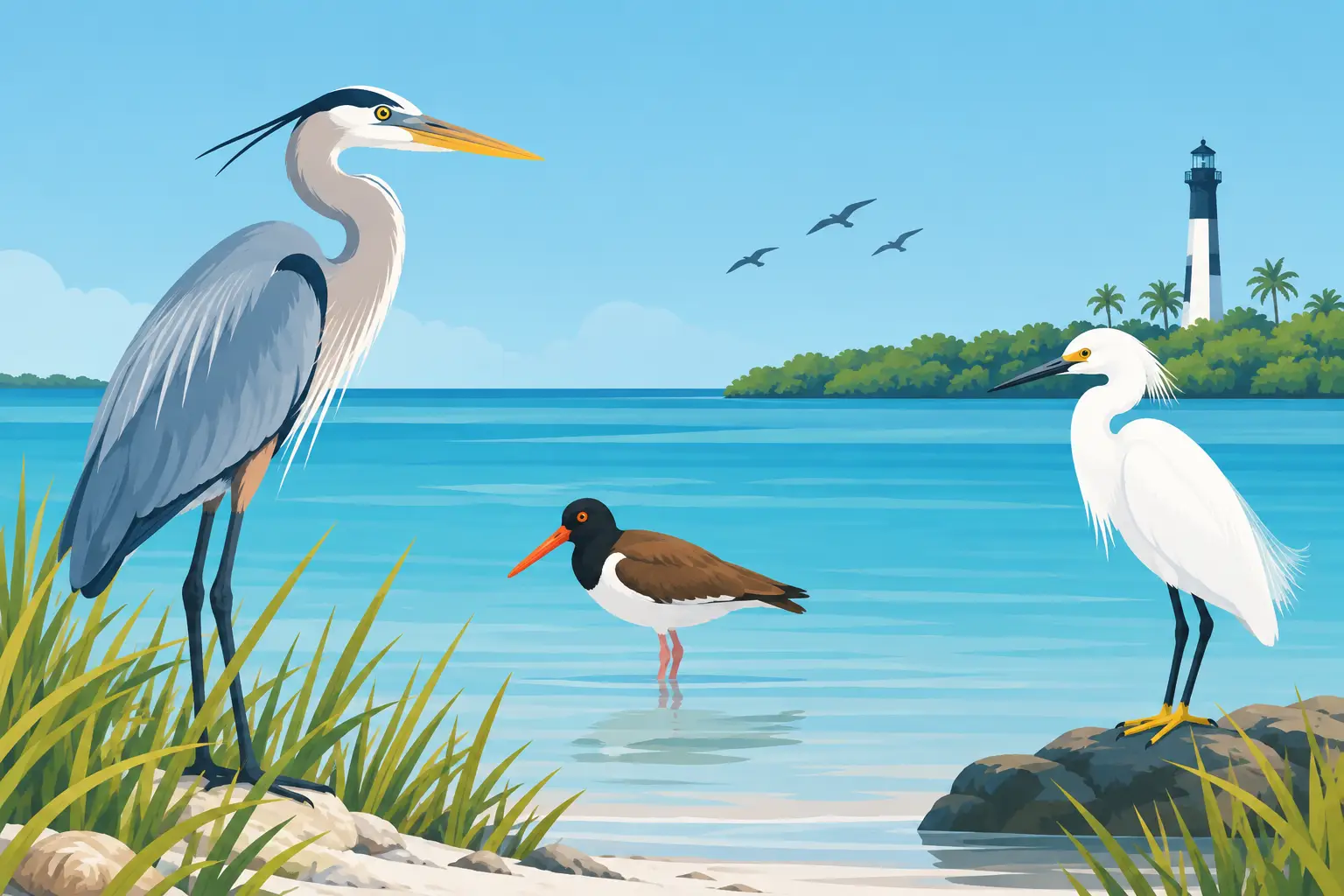
A heron or egret is tall, narrow, and leggy, with a long neck that is usually pulled into an S-shape when it flies. Their wings beat slowly and broadly. Great blue herons look large and blue-gray, while great egrets are equally stately but bright white with a yellow bill. Snowy egrets are smaller, more delicate white birds with black bills, black legs, and flashy yellow feet that can look like they borrowed tiny rubber gloves.
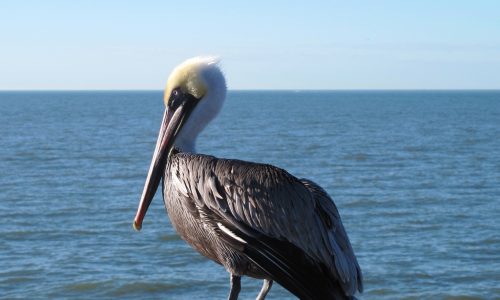
A brown pelican has a much heavier silhouette: a long bill with a pouch beneath it, a chunky body, and broad wings. It often glides low over the water in a line, barely moving its wings. If it suddenly folds those wings and drops like a feathered torpedo, you have witnessed one of the coast’s best fishing techniques.
A tern looks slimmer and sharper than a gull, with pointed wings, a narrow body, and a quick, graceful flight. Terns often hover over water before making a neat plunge for a small fish. Gulls tend to look broader-winged and less delicate, and they are more likely to be scouting for an unattended snack on the dock.
Let habitat narrow the choices
A bird’s location tells you a great deal before you ever raise binoculars. Coastal birds use different parts of the ecosystem for different jobs: hunting, resting, nesting, or keeping an eye on your sandwich.
On a mudflat or shallow shoreline, look for wading birds. Egrets, herons, ibis, roseate spoonbills, and willets search these areas for fish, crabs, shrimp, and other small meals. Their legs are the giveaway. A bird standing in water up to its knees is probably not a gull having a very strange afternoon.
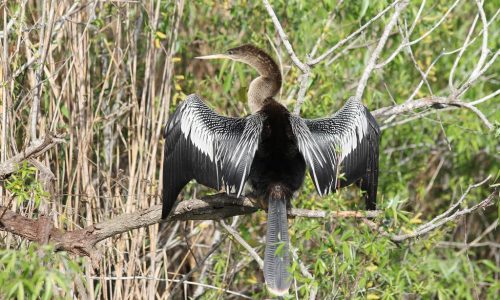
Around mangroves, watch for green herons, yellow-crowned night-herons, and anhingas. Green herons are compact and dark, often perching quietly along a branch before striking at prey. Anhingas may sit with their wings held open to dry, looking like they are auditioning for a role as a dramatic swamp villain. Their long necks and pointed bills separate them from cormorants, which are similarly dark but tend to look stockier and have hooked bills.
Over open water, pelicans, terns, gulls, ospreys, and frigatebirds are more likely. Ospreys patrol with wings bent at the wrist, creating a noticeable M-shape from below. When one hovers, then drops feet-first toward the water, it is hunting fish rather than sightseeing.
On sandy beaches and shell bars, pay attention to smaller shorebirds. Sanderlings run in quick groups at the edge of the surf, chasing retreating waves with frantic little legs. Willets are larger, gray-brown, and often reveal bold black-and-white wing stripes only when they take flight. This is a good reminder that a bird’s hidden markings can matter as much as its resting color.
Watch the way each bird moves
Behavior is often the fastest identification tool. You do not need to know every species right away. Start by asking one simple question: what is this bird doing?
A reddish egret may be easy to recognize by its hunting style alone. Instead of standing still like many wading birds, it dashes, spins, flares its wings, and stirs the water as it chases fish. It looks less like a patient angler and more like someone trying to catch a dropped phone before it reaches the dock.
Roseate spoonbills sweep their flattened, spoon-shaped bills side to side through shallow water. White ibises probe sand and mud with long, curved orange bills. Oystercatchers use their bright orange, chisel-like bills to pry open shellfish. Each bird has equipment suited to a specific menu, so bill shape is worth studying.
Flight patterns matter, too. Pelicans glide in long, low lines. Ospreys flap, hover, and dive. Frigatebirds rarely seem to flap much at all as they soar high overhead with long, angular wings and a deeply forked tail. If you see a large dark bird effortlessly riding the breeze above the coast, it may be a magnificent frigatebird.
Use color carefully, especially in bright sun
Color can help, but it can also fool you. Florida sunshine turns white birds brilliantly bright, shadows make blue-gray birds look nearly black, and juvenile birds often wear different colors than adults. Start with the biggest color blocks rather than trying to identify every subtle shade.
For example, a roseate spoonbill’s pink plumage is hard to miss, but young spoonbills can appear much paler. A tricolored heron may look dark from a distance, yet closer views reveal blue-gray wings, a white belly, and a lighter neck. A juvenile little blue heron is white for its first year, which means it can be mistaken for an egret until you notice its two-toned bill and greenish legs.
This is where patience pays off. Watch the bird change position, look for its legs and bill, and see whether it is alone or traveling with similar birds. A quick photo can help later, but do not let the camera keep you from watching the actual behavior unfold.
Learn the local birds worth knowing first
You can identify plenty of coastal birds without trying to memorize every rare visitor. Start with the species you are most likely to encounter on Fort Myers Beach waters:
- Brown pelican: large, low-flying, long-billed, and fond of dramatic plunge-dives.
- Osprey: white underside, dark wings, hooked bill, and a habit of carrying fish in powerful talons.
- Great egret: tall white wader with a yellow bill and black legs.
- Snowy egret: smaller white egret with a black bill and yellow feet.
- Great blue heron: the largest common heron, blue-gray with a slow, deliberate stride.
- White ibis: white body, curved orange bill, and black wing tips visible in flight.
- Royal tern: pale gray-and-white seabird with a black cap, orange bill, and shaggy little crest.
- Laughing gull: gray wings, white body, and a dark hood during breeding season, often heard before it is seen.
Knowing these common characters gives you a foundation. From there, the unusual bird becomes easier to notice because it breaks the pattern.
Bring the right tools, but trust your eyes
Binoculars are useful on a wildlife cruise, but they are not mandatory. A pair in the 7x or 8x range is often easier to hold steady on a boat than higher magnification. Keep them dry, use the boat railing for balance when possible, and scan in short bursts instead of trying to hold a bird in view through every wave.
A birding app or field guide can confirm what you saw, particularly if it includes range maps and bird calls. Still, avoid treating an app like a final judge. Coastal birds change appearance by age, season, and breeding condition, and a blurry photo can make even a pelican look suspiciously exotic.
The better habit is to make a mental note of size, bill shape, leg color, habitat, and behavior. Those five details are far more useful than remembering that the bird was “sort of gray.” If you are unsure, that is part of the fun. Wildlife does not hand out name tags.
A skilled naturalist can point out the clues that are easy to miss from the deck, turning a passing silhouette into a story about feeding, nesting, migration, and survival. On the next trip out, take a moment to look beyond the obvious dolphin splash. The bird standing quietly in the shallows may be the most interesting thing you see all day.