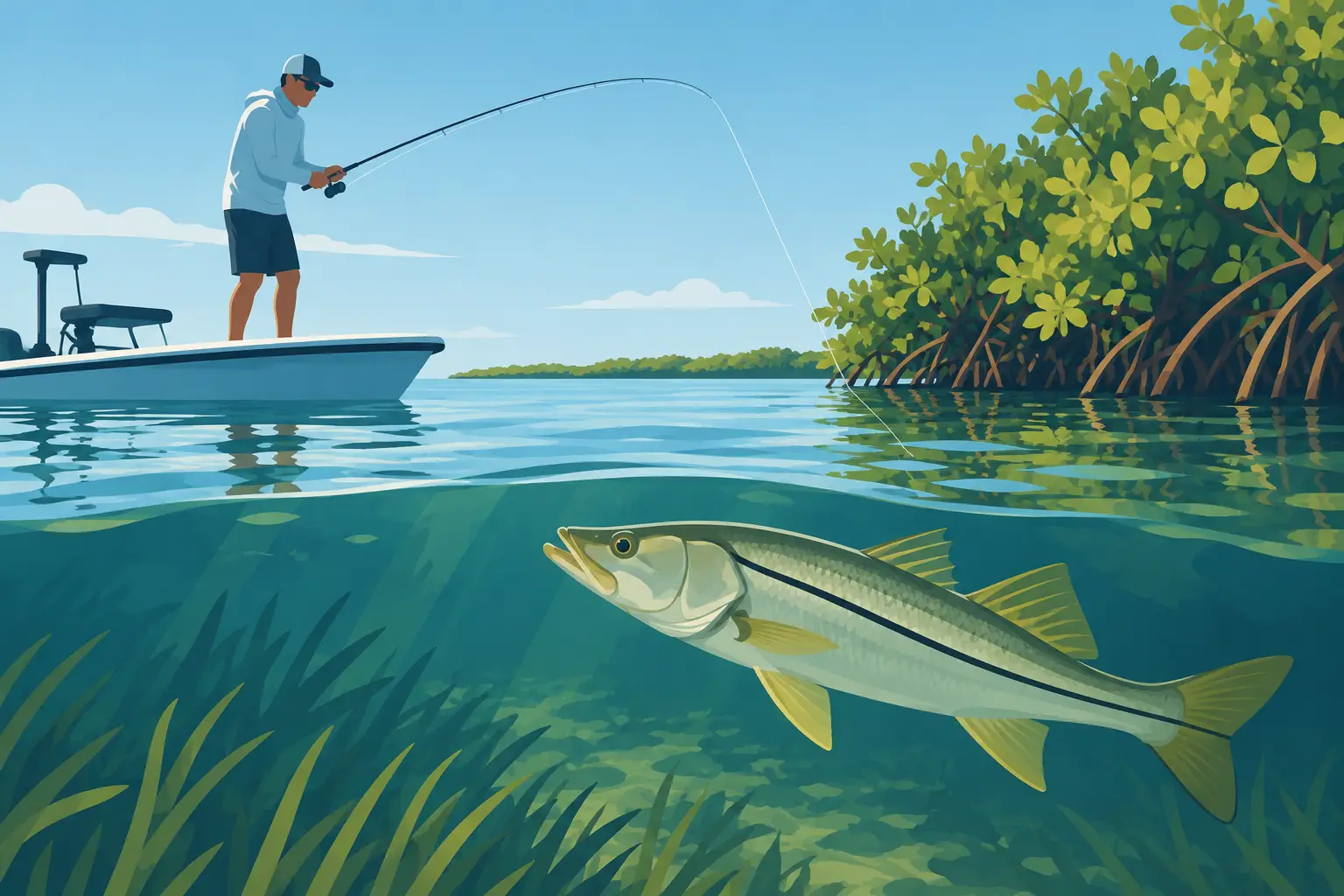
A snook exploding beside a mangrove shoreline is one of those Florida moments that makes everyone on the boat stop talking. Learning how to catch backwater snook is less about casting the biggest lure and more about reading moving water, making a quiet approach, and putting a bait where a fish feels safe enough to eat it.
Backwater snook are smart, structure-oriented predators. They use mangrove points, docks, oyster bars, creek mouths, grass edges, and shadow lines as both ambush cover and rest stops. Give them a clean presentation at the right stage of the tide, and even a first-time angler has a real shot at a memorable fish.
Start With the Tide, Not the Tackle
Tide movement is the dinner bell in the backcountry. Snook may hold around the same shoreline for hours, but their feeding position changes as current changes. A spot that looks lifeless at slack tide can come alive when water begins moving around a point or pouring from a small creek.
An outgoing tide is a reliable place to start. As water drains from mangrove shorelines and shallow bays, small baitfish, shrimp, and crabs funnel toward deeper cuts and creek mouths. Snook often wait just outside that moving water, facing into the current with very little effort. Cast upcurrent and let your bait sweep naturally toward the fish.
Incoming water can be excellent, too, especially around flooded mangrove edges. As the tide rises, snook may slide shallow to hunt minnows hiding beneath overhanging branches. In that situation, a cast placed tight to the mangroves can matter more than a long cast. The fish may be tucked into a spot that looks barely large enough to hold one.
Slack tide is not automatically a lost cause, but it usually calls for patience. Focus on deeper dock pilings, shaded channels, and areas with any remaining current. If there is no water moving, it may be smarter to enjoy the scenery for a few minutes and move when the tide does.
Where Backwater Snook Hold
Snook like an easy meal and an easy escape route. The best habitat gives them both. In Southwest Florida backwaters, that often means a structure break beside deeper water.
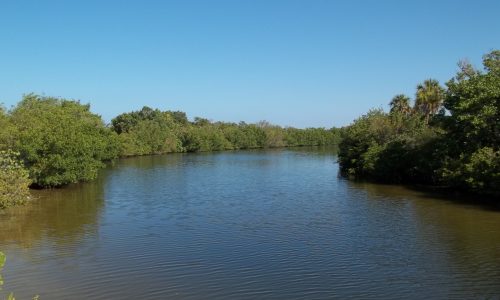
A mangrove point is a classic example. Current pushes around the point, bait gets disoriented, and snook can sit just out of the strongest flow before darting out to feed. Creek mouths work the same way, particularly where a shallow creek spills into a deeper channel.
Docks deserve close attention, but avoid treating every dock the same. Look for shade, pilings, a little depth, and moving water. Older docks with algae-covered pilings and a good shadow line often hold more life than a bright, open dock in skinny water. Make a cast along the outside edge first. If nothing happens, work farther beneath the structure only if you can do it without snagging every barnacle in the county.
Oyster bars and grass edges can produce when bait is present. Watch for nervous water, flipping mullet, small birds picking at the surface, or a flash of silver near the shoreline. Those clues often tell you more than a fancy chart ever will.
How to Catch Backwater Snook With Live Bait
Live bait is a friendly starting point because it looks, smells, and behaves like food. Pilchards, threadfin herring, pinfish, shrimp, and small mullet can all catch snook, depending on what is naturally present. Matching the local forage is generally a better plan than insisting on one favorite bait.
For a simple setup, use a medium-light to medium inshore spinning outfit with a smooth drag, braided line, and a short fluorocarbon leader. Snook have abrasive mouths and often live around rough structure, so leader choice matters. The right size depends on water clarity, the size of the bait, and how close you are fishing to dock pilings or oysters. Lighter leader can get more bites in clear water, while heavier leader offers more insurance around barnacle-covered cover.
Hook a small baitfish lightly through the nose or just ahead of the dorsal fin, then let it swim naturally. A free-lined bait works beautifully when current is moving. If you need to get deeper or keep the bait from wandering, add the smallest amount of weight that does the job. Too much weight can make an otherwise lively bait look like it is dragging a suitcase.
Shrimp are especially useful around docks, mangroves, and cooler-water periods. Fish one beneath a popping cork when you need to cover a grass edge, or free-line it near cover when snook are holding shallow. A gentle pop every so often can draw attention, but let the shrimp do most of the convincing.
Artificial Lures That Earn Their Keep
Artificial lures are ideal when bait is hard to find, when you want to cover water, or when you simply enjoy the challenge of making a fish commit. Soft-plastic paddletails, jerk baits, suspending plugs, and topwater walkers are all worthwhile backwater choices.
A weedless soft plastic is hard to beat around mangrove shorelines. Cast it close to the edge, let it settle briefly if the water has depth, then retrieve it with a few short twitches and pauses. Snook often strike on the pause. Keep the lure moving slowly enough to stay in the zone, but not so slowly that it hangs in every root.
Suspending plugs are useful around deeper mangrove points and docks. A twitch-twitch-pause cadence can trigger fish that will not chase a steady retrieve. In clear water, natural baitfish colors are a dependable choice. When the water is stained from wind or rain, a brighter pattern or one with a little more flash can help fish locate it.
Topwater fishing is pure fun when conditions line up. Early morning, late afternoon, and low-light weather can produce explosive strikes along shallow banks. Do not set the hook the instant the water erupts. Keep working the lure until you feel the weight of the fish, then come tight. It sounds easy until a snook blows a hole in the water three feet from the boat.
Make the Quiet Cast
Backwater snook often live in shallow, calm water where noise carries. A great bait will not help much if the boat bangs into a dock, the cooler lid slams, or an anchor lands on top of the fish.
Approach likely shorelines slowly and cast ahead of the boat. Whenever possible, use wind and current to drift into position rather than powering directly at the target. Keep movements calm, especially in clear water. Polarized sunglasses help you spot bait, submerged branches, shadow lines, and sometimes the snook itself.
Accuracy beats distance in most backwater situations. Put a bait beside the mangrove roots, under the dock edge, or along the seam where fast water meets slower water. If your cast lands a few feet away from the strike zone, do not assume the fish will come find it. Snook are predators, but they are not always feeling generous.
Fight the Fish Away From Structure
The first few seconds after a snook bites are the most important. Its instinct is usually to run straight for mangrove roots, dock pilings, or oysters. Keep steady pressure and angle the rod to pull the fish away from danger, but avoid locking down so hard that you break the line.
A smooth drag is your best friend. Let a strong fish take line when it must, then gain line patiently when it turns. If the fish jumps, lower the rod tip slightly to reduce slack and keep tension. Snook have a reputation for throwing hooks, and they work hard to maintain it.
Handle landed fish with wet hands and support the body horizontally. Their protective slime coating matters, and large fish should never be held vertically by the jaw alone. If you plan to release the fish, keep it in the water as much as possible and let it swim away under its own power.
Respect Seasons, Sizes, and the Fishery
Snook regulations can change by region and season, including harvest dates, slot limits, bag limits, and required permits. Check current Florida rules before keeping any fish. If there is uncertainty, release it. A quick photo and a healthy release still make an excellent vacation story.
Many of the biggest backwater snook are breeding-age fish that help sustain the fishery. Releasing large fish carefully is one of the simplest ways anglers can protect the action that brings people back year after year.
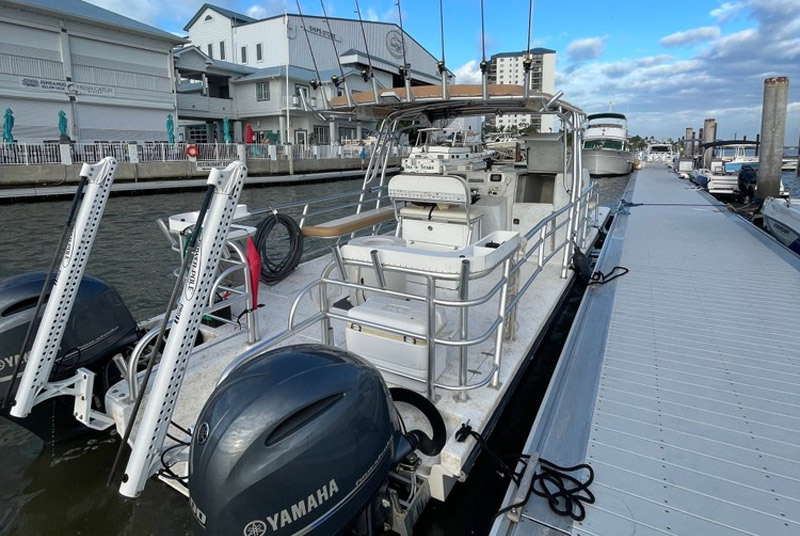
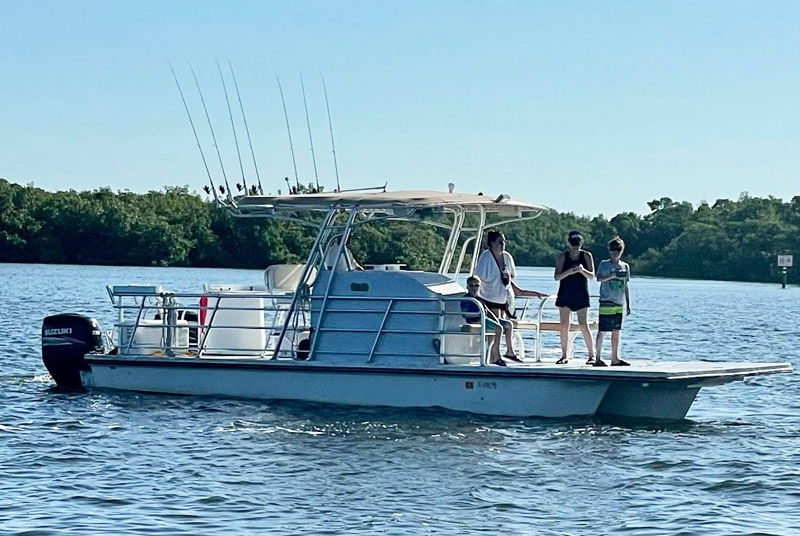
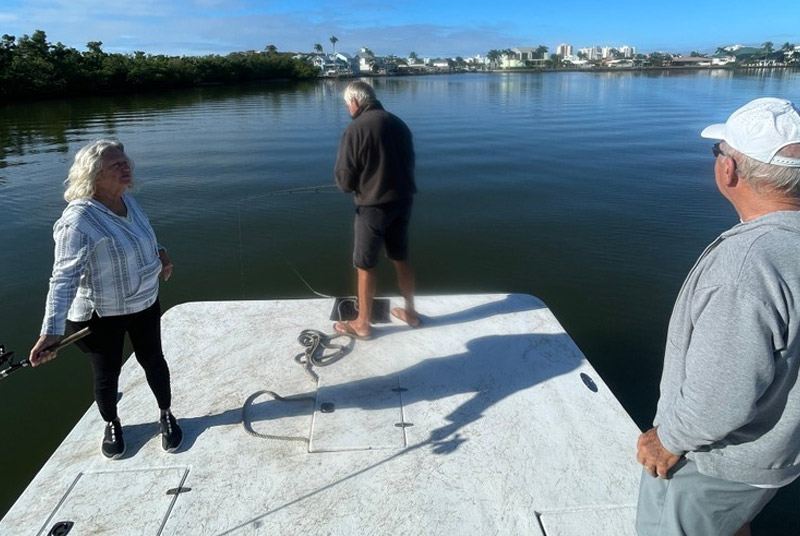
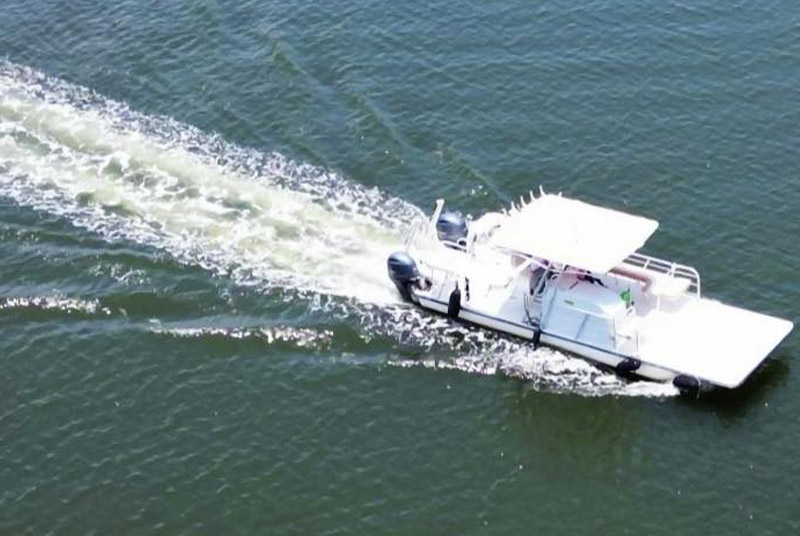
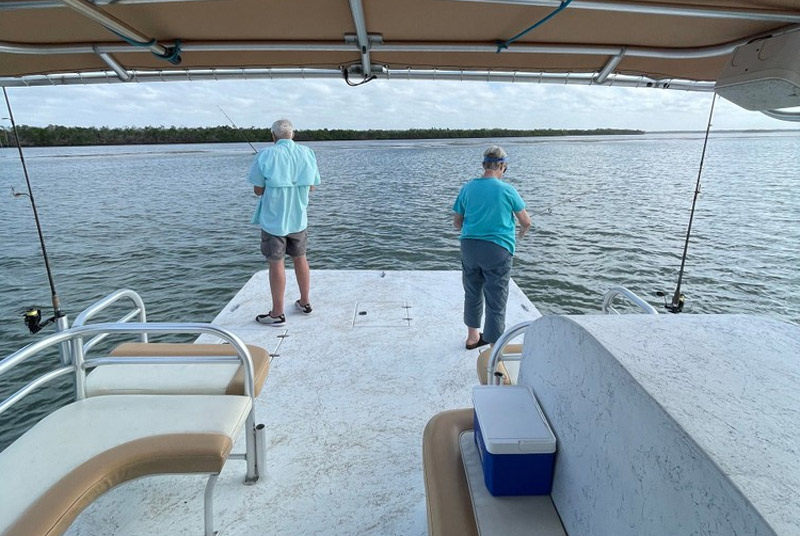
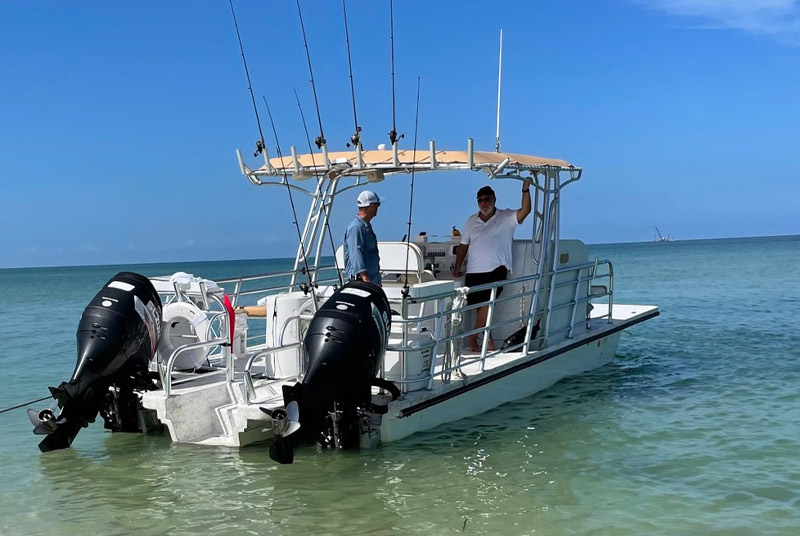
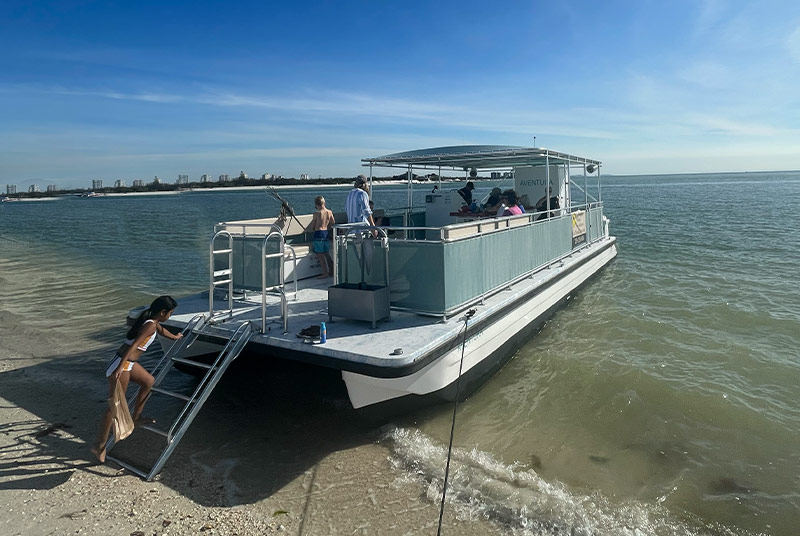
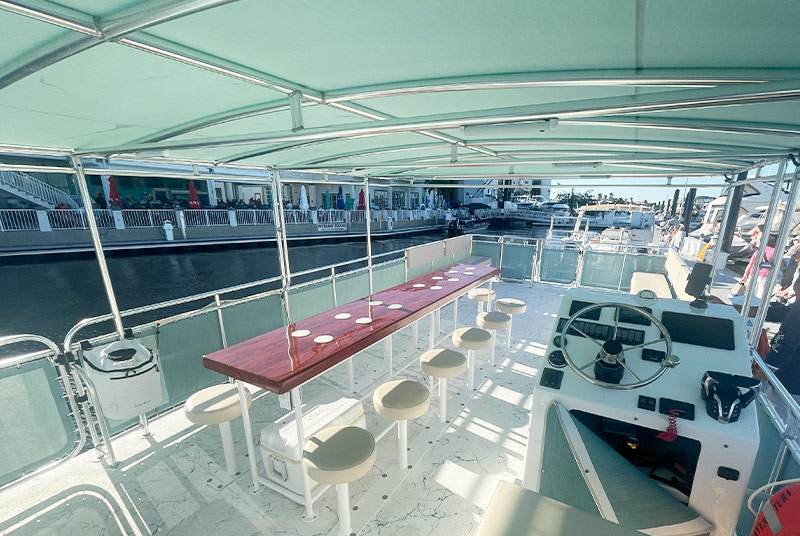
A guided outing can shorten the learning curve because a local captain can help you read tides, choose productive habitat, and make the small adjustments that turn a quiet shoreline into a strike. On Good Time Charters’ private fishing cat, that also means more time enjoying the mangroves, birds, and estuary life between casts.
The next time you see bait flickering beside a mangrove point, resist the urge to rush in. Ease close, watch the current, make one accurate cast, and be ready. Backwater snook reward the anglers who pay attention.