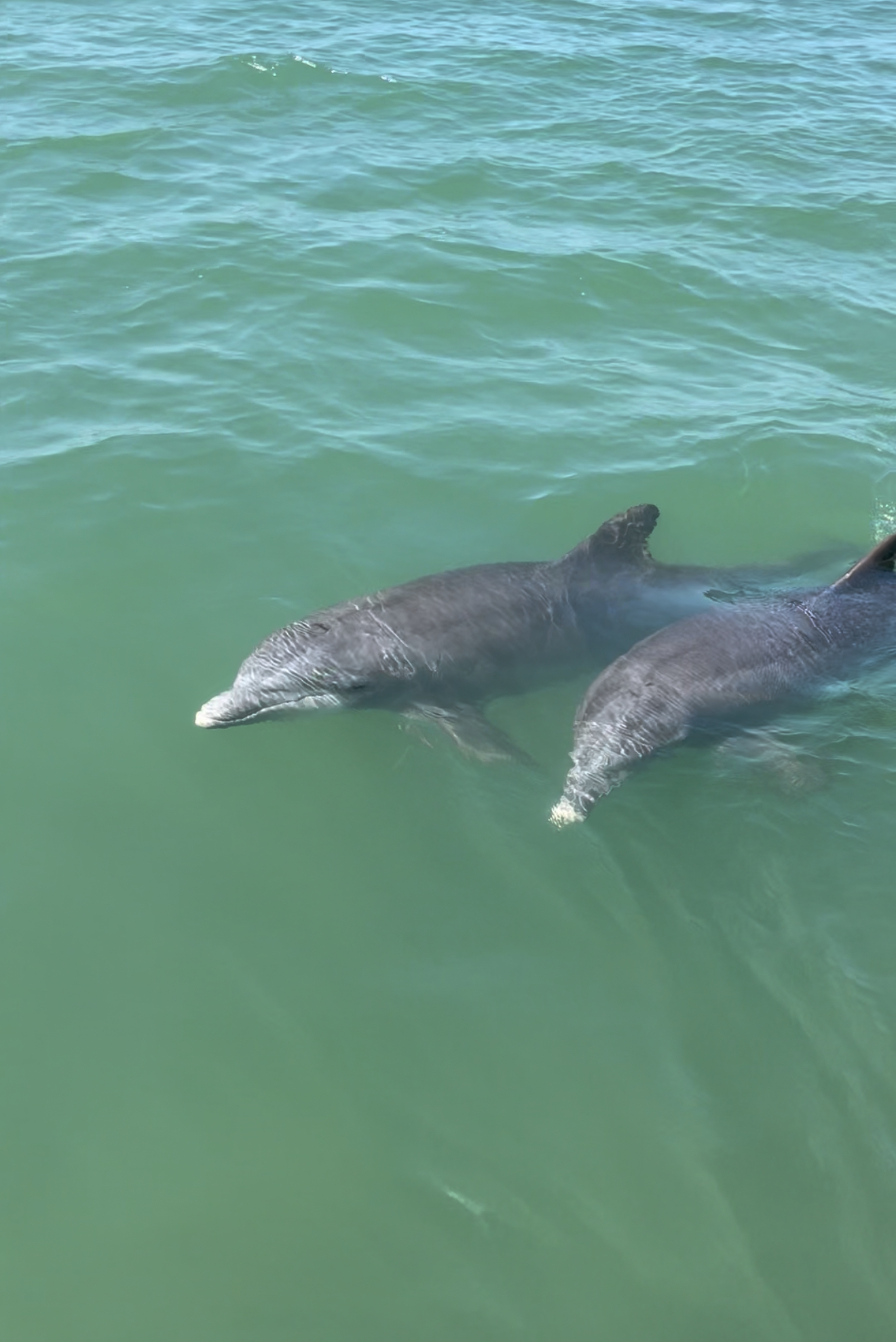
You can be on the water for ten minutes and see a dolphin leaping beside the boat, or spend an hour scanning calm water before a dorsal fin finally breaks the surface. That is why so many visitors ask when are dolphins most active. The short answer is it is not predictable. Dolphins don’t follow a routine schedule hour to hour. Patience is your friend so pick the time of day that works best for you.
If you want better odds of a memorable sighting, it helps to understand what dolphins are actually doing out there. They are not performing on a schedule. They are feeding, socializing, traveling, resting, and responding to tides, bait movement, boat traffic, and weather. Once you look at dolphin behavior that way, the patterns make much more sense.
When are dolphins most active during the day?
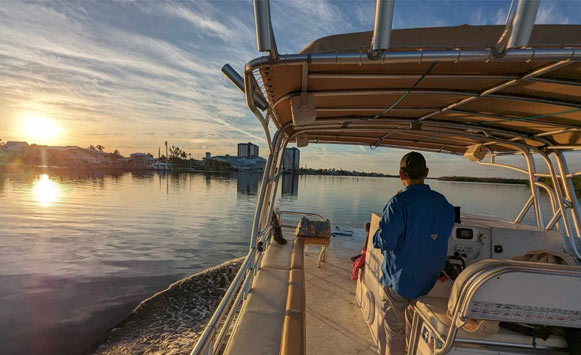
In many coastal areas, dolphins tend to be most visibly active around sunrise and in the late afternoon into early evening. Those windows often line up with calm winds and seas, cooler temperatures, lower glare on the water, and feeding opportunities as fish move with changing light and current.
Morning can be especially productive because the water is often calmer and boat traffic is lighter. That does not just make it easier for people to spot dolphins. It can also create conditions that support hunting and coordinated feeding. A calm surface makes subtle movement easier to notice, whether that is a rolling back, a tail slap, or a small pod pushing bait.
Late afternoon can be another strong period. Fish often become more active again as the sun lowers, and dolphins may take advantage of that. On some days, you will see more traveling and feeding behavior before sunset. On others, dolphins seem to appear throughout the day in short bursts, then disappear just as quickly.
Midday is more variable. Dolphins do not stop being active because the sun is high, but they may be harder to spot and less likely to show dramatic surface behavior. Bright light, choppier water, and heavier recreational boat traffic can all work against a clean sighting.
Why tides often matter more than the hour
If there is one factor that regularly surprises people, it is how much tides influence wildlife movement. In estuaries, bays, and coastal passes, dolphins often track food. That means they pay close attention to moving water, especially where currents concentrate baitfish.
An incoming tide can bring bait into back bays, mangrove edges, and shallow feeding zones. An outgoing tide can pull fish through channels, cuts, and passes where dolphins know they can hunt efficiently. In practical terms, that means a so-called perfect dolphin hour can be quiet if the tide is slack, while an otherwise ordinary time of day can be excellent when water movement is strong.
This is one reason knowledgeable local captains and naturalist guides have such an advantage. They are not simply heading out and hoping for fins. They are reading the conditions, watching bird behavior, tracking bait, and understanding where dolphins are most likely to travel and feed under that specific set of circumstances.
Feeding, socializing, and resting all look different
People often picture dolphin activity as constant jumping and splashing. Real life is more nuanced. Sometimes the most active dolphins are feeding in a way that looks subtle from a distance. You may see steady surfacing in a line, quick directional changes, or a pod working shoreline edges with purpose.
Feeding behavior can include chasing schools of fish, corralling bait against a shoreline, or using current breaks to their advantage. In these moments, dolphins may surface more frequently, but not always dramatically. If you know what to look for, the water tells the story.
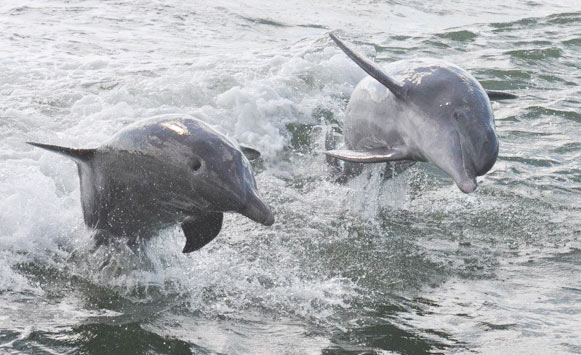
Socializing can be more playful and easier to recognize. Dolphins may leap, roll, chase one another, or ride pressure waves near a moving boat. These are the sightings that guests often remember most because they feel personal and high energy.
Resting is quieter. Dolphins still need to surface for air, but their movements may be slow, regular, and less showy. A pod in a resting mode can seem almost sleepy compared with a feeding group. That does not mean they are gone. It just means the behavior has shifted.
Weather and water conditions change the answer
When people ask when are dolphins most active, they usually mean when they are most likely to see them clearly. That is where weather matters.
Calm water almost always improves visibility. Even if dolphin behavior is similar on two different days, a glassy morning makes each surfacing easier to catch than a windy afternoon with chop and glare. Light cloud cover can also help by reducing harsh reflection on the water.
Windier conditions do not necessarily reduce dolphin activity, but they can make sightings harder for guests. The same is true after storms or fronts, when water color, current, and fish movement may shift quickly. Dolphins adapt well, but the pattern may not match what worked the day before.
Season plays a role too, though not in a simple all-or-nothing way. In Southwest Florida, dolphins can be seen year-round. Water temperature, prey availability, and seasonal boating patterns can all influence where they spend time and how easy they are to find. That is why local knowledge matters more than broad assumptions like summer is best or winter is best.
Are dolphins more active in the morning or evening?
If you want the clearest practical answer, morning usually gets a slight edge. Earlier trips often benefit from calmer water, less marine traffic, cooler air, and strong feeding opportunities. That combination is tough to beat for visibility and overall wildlife watching.
Evening can be excellent too, especially when fish are moving and the water settles down. The trade-off is that conditions are sometimes less predictable after a full day of wind and boating activity. Still, a late-day cruise can produce fantastic sightings, especially alongside beautiful coastal light and other wildlife activity.
So if your schedule is flexible, morning is often the safest bet. If evening fits your vacation better, it is still absolutely worth going. Dolphins do not punch a time clock.
Where you look matters as much as when
Dolphins are highly adaptable, but they are not random. They tend to use productive habitat repeatedly. Channels, passes, bay mouths, mangrove shorelines, shallow flats near deeper water, and areas with concentrated bait are all strong places to watch.
That matters for visitors because timing alone will not fix a poor location. You can go out at sunrise, but if you are not in an area where dolphins commonly travel or feed, your odds drop. On the other hand, being in a proven habitat with a guide who understands the local ecosystem can turn a decent time window into a great outing.
Around Fort Myers Beach, estuarine waters provide exactly the kind of habitat dolphins use for feeding and travel. That does not guarantee nonstop action every trip, but it does create the kind of environment where skilled captains and naturalist-led crews can consistently put guests in the best position for sightings.
What guests should expect on a dolphin outing
The best dolphin trips are not built around promises of a single dramatic moment. They are built around understanding behavior and enjoying the whole experience of being on the water.
Some outings bring close, repeated sightings with active pods surfacing near the boat. Some feature more distant but fascinating feeding behavior along a shoreline. Some include a mix of dolphins, birds, manatees, and other coastal wildlife, with the dolphins appearing in shorter windows.
That is part of what makes a naturalist-led experience more rewarding. You are not just waiting for something to jump. You are learning how to read the water, why dolphins are in that area, what they may be doing, and how the surrounding ecosystem supports them. For families, couples, and travelers who want more than a generic ride, that deeper understanding makes the day feel richer even before the next dorsal fin appears.
The best time to see dolphins is when conditions line up
There is a reason simple answers only go so far. Dolphins are often most active and easiest to spot in the morning or late afternoon, but the best sightings usually happen when several factors align at once: moving tide, available bait, manageable wind, good visibility, and productive habitat.
That is also why experienced crews tend to outperform guesswork. They know that a calm morning with slack water may not be as strong as a later trip timed around current and bait movement. They know when birds are hinting at feeding activity. And they know the difference between a place where dolphins occasionally pass through and a place where they regularly work.
If you are planning a dolphin cruise, think less about finding the one magic hour and more about choosing an outing led by people who understand the rhythms of the water. That is usually when the most unforgettable sightings happen.