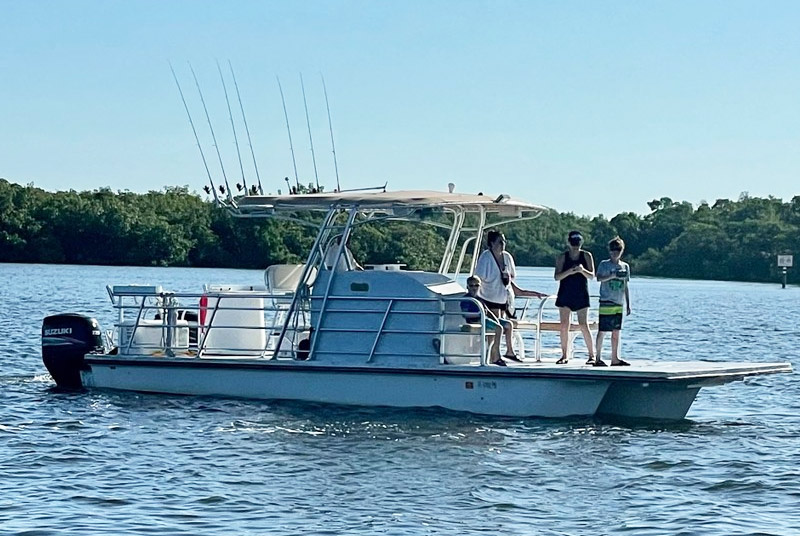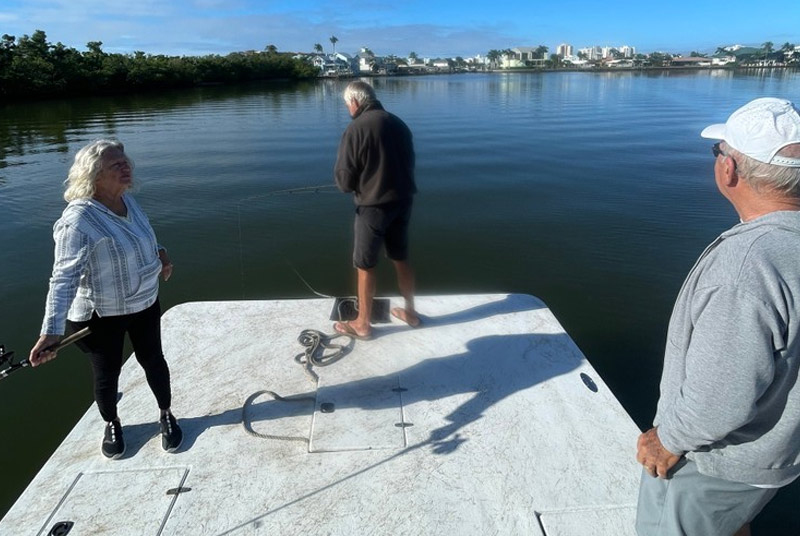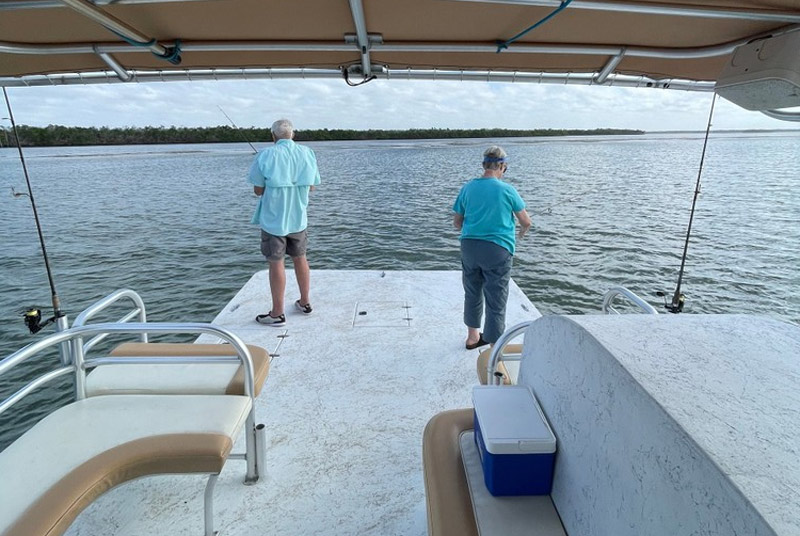
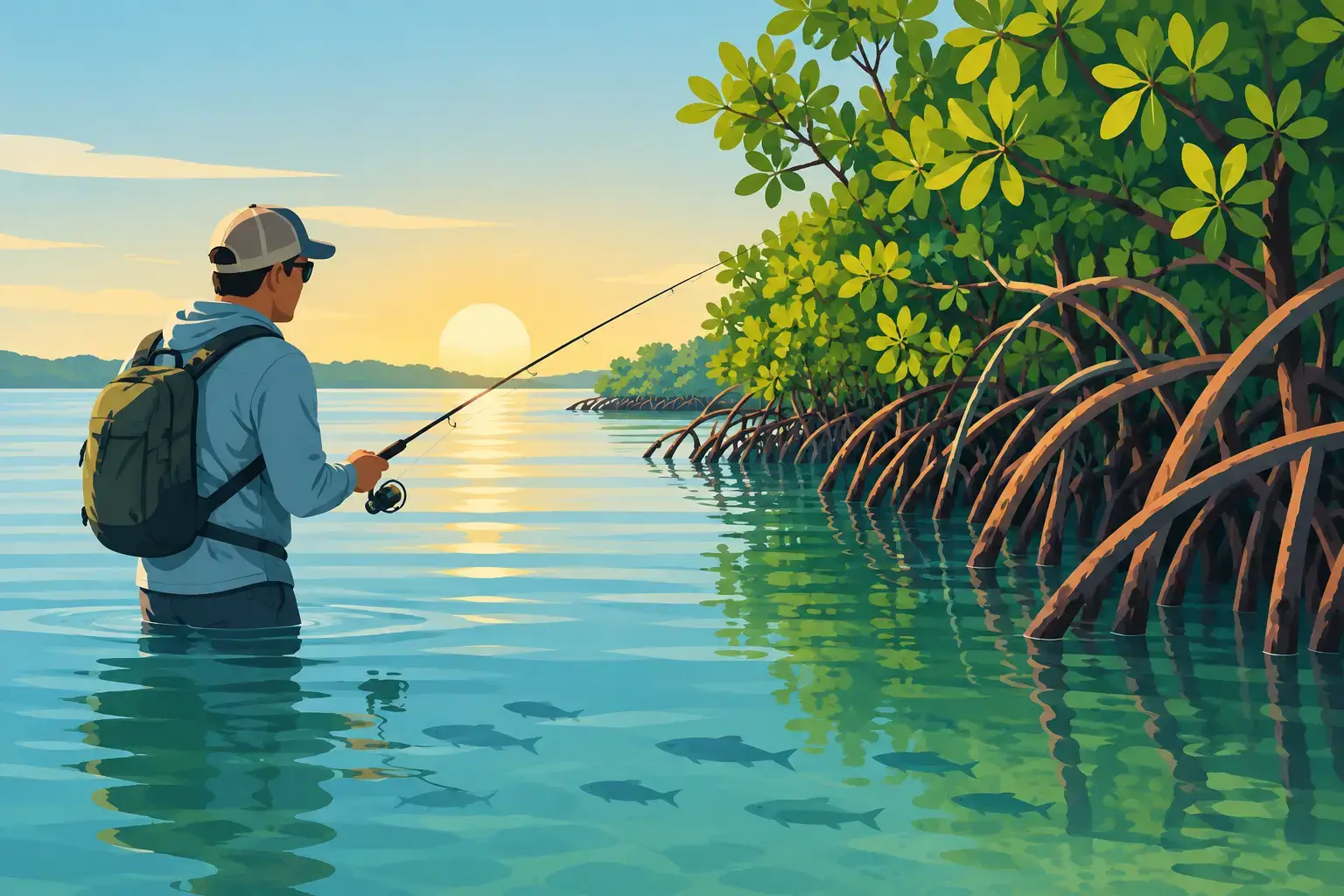
A mangrove shoreline can look like one long wall of green until a snook explodes on your lure three feet from the roots. Learning how to fish mangrove shorelines is less about covering miles of bank and more about recognizing the tiny details that concentrate fish: a moving tide, a darker pocket, a point catching current, or a baitfish flicker where the shade meets open water.
Around Southwest Florida, mangroves are more than scenic waterfront real estate. Their root systems shelter juvenile fish, hold crustaceans and bait, and create the ambush lanes used by snook, redfish, seatrout, jacks, and a cast of other backwater regulars. Fish them thoughtfully, and a quiet shoreline can produce some of the most exciting action of the day.
Start With the Tide, Not the Tackle
Tide movement is the engine of mangrove fishing. A shoreline with water moving along it has food in transit, and predators know it. The best tide depends on the bank, the season, and how shallow the water is, but moving water usually beats slack water.
On a falling tide, fish often slide out of flooded grass, shallow ponds, and narrow mangrove cuts toward deeper edges. This can make creek mouths, drainages, and points especially productive. Look for water pouring from a small opening in the trees. It may not look like much, but that flow can carry shrimp, minnows, and crabs straight past waiting fish.
A rising tide opens new territory. Redfish and snook may push tight into the shoreline or underneath overhanging branches as water covers oyster edges and shallow roots. During very high water, fish can spread out, which makes them tougher to pinpoint. Focus on the first few hours of incoming water when possible, before they disappear deep into the flooded mangroves and become hard to reach.
The practical lesson is simple: do not pull up to a mangrove bank and cast blindly. Watch the current first. Notice whether bait is moving, whether water is draining from a cut, and whether fish have enough depth to travel along the edge.
How to Fish Mangrove Shorelines Quietly
Mangrove fish live in close quarters, but they are not careless. A dropped hatch, a trolling motor run too fast, or a boat pushed directly onto a point can send a good stretch of shoreline silent in a hurry.
Approach from far enough away that your first cast lands before the boat reaches the fish. Use a trolling motor carefully, drift when conditions allow, and let the wind or current help position the boat. In skinny water, a push pole or shallow-water anchor can be more useful than constantly correcting with the motor.
Cast ahead of the boat’s path, not beside it. Work a shoreline methodically, beginning with obvious features such as points, cuts, overhangs, and isolated pockets. Then make a few casts parallel to the bank. A lure moving along the mangrove edge stays in the strike zone longer than one that only crosses it for a second.
Accuracy matters more than heroic casting distance. Many bites come within a foot or two of the roots, beneath a low branch, or at the mouth of a tiny tunnel. If a cast lands perfectly but gets ignored, pause before retrieving. A bait resting near cover can look like an easy meal, especially when the current is doing some of the work for you.
Read the Mangroves Like Fish Habitat
Not every section of shoreline holds fish equally. The best banks have an advantage: current, depth, shade, bait, structure, or access to a nearby flat. The more of those ingredients you find in one place, the longer it deserves your attention.
Points, Pockets, and Drains
Mangrove points interrupt the current and create natural feeding stations. Fish may sit on the up-current side to intercept bait or tuck into the calmer water just behind the point. Cast to both sides before moving on.
Pockets can be excellent on higher water, particularly if they have a dark bottom, scattered oysters, or a visible bait presence. A narrow drain or creek mouth is even better when the tide is falling. Work the opening thoroughly, then make a few casts out into the adjacent deeper water. Fish often stage just outside the mouth rather than inside it.
Shade Lines and Overhangs
Florida sun is no joke, and shade gives baitfish and predators a comfortable place to wait. Under low-hanging mangroves, a weedless soft plastic or a live bait can slip into territory a treble-hooked plug cannot reach.
Be patient around overhangs. Snook in particular may sit so tight to the roots that their strike appears to come from nowhere. A lure that bumps a root, pauses, and darts away can trigger the kind of bite that makes everyone on the boat suddenly very alert.
Oyster Bars and Deeper Edges
Oyster bars near mangroves often turn a pretty shoreline into a full buffet. They attract small crabs, shrimp, and baitfish, while the irregular bottom creates protected holding spots. Use caution here. Oysters can slice line, damage propellers, and turn a rushed approach into an expensive lesson.
A slightly deeper trough along the mangrove edge is another high-percentage feature, especially during lower water. If the flat is nearly dry, that trough may be the only practical travel lane left for fish.
Match Your Bait to the Conditions
For beginners, live shrimp is hard to beat. It appeals to snook, redfish, trout, snapper, sheepshead, jacks, and plenty of species that were not part of the original plan. Fish it under a popping cork over grass or shallow edges, free-line it near mangrove roots when current is moving, or add a small split shot only when you need help getting it down.
Live pilchards and other small baitfish can be outstanding around active snook and jacks. Keep the presentation natural. Heavy tackle and oversized weights may get the bait into the zone, but they can also make it look suspicious or snag-prone.
Artificial lures are ideal when you want to cover water efficiently. Soft plastic paddletails, jerk baits, shrimp imitations, and weedless rigged plastics all earn a place in the tackle bag. A small topwater plug can be a thrilling choice around first light or late afternoon, particularly when bait is present and the surface is calm enough to reveal a strike.
Color is usually less important than presentation. In clear water, natural baitfish, white, silver, and translucent patterns are dependable. In stained water, choose something with contrast, such as chartreuse, gold, or a darker silhouette. More important: make the lure travel like something alive and vulnerable.
Use Tackle That Can Handle the Roots
Medium-light to medium spinning tackle covers most inshore mangrove situations. A 2500- to 4000-size reel, a responsive rod, braided main line, and a fluorocarbon leader offer a good balance of casting distance, sensitivity, and control.
Leader strength depends on the target and the terrain. Lighter leader may produce more bites in clear water, but snook do not politely swim away from mangrove roots after eating. Around sharp oysters, dense cover, or larger fish, a stronger leader gives you a better chance of getting them clear. This is one of those moments where “it depends” is the honest answer.
When a fish eats near the roots, keep steady pressure and turn its head quickly. Do not high-stick the rod or wrench wildly. Smooth pressure, a tight drag set for the situation, and a clear plan are more useful than panic. The mangroves have home-field advantage.
Respect the Nursery While You Fish
Mangroves protect Florida’s coast from erosion and provide essential nursery habitat for marine life. Avoid cutting corners through shallow roots, dragging anchors across grass flats, or damaging branches for a better cast. Give birds room, especially around nesting areas, and handle fish with wet hands whenever possible.
Know current regulations before keeping any fish. Size limits, seasons, and slot rules can change, and responsible anglers check before the first line goes overboard. If you are releasing a fish, support it horizontally, minimize time out of water, and let it swim away under its own power.
A guided outing can shorten the learning curve considerably, particularly for families or visitors who would rather spend their vacation fishing than decoding tides and navigation charts. Good Time Charters pairs approachable backwater fishing with the kind of naturalist perspective that helps guests understand why one little mangrove cut is alive while the next one is quiet.
The next time you pass a mangrove shoreline, slow down and look closer. Find the moving water, watch for nervous bait, make the quiet approach, and place one accurate cast where a fish has every reason to be. That is often all it takes to turn a wall of green into a very good memory.