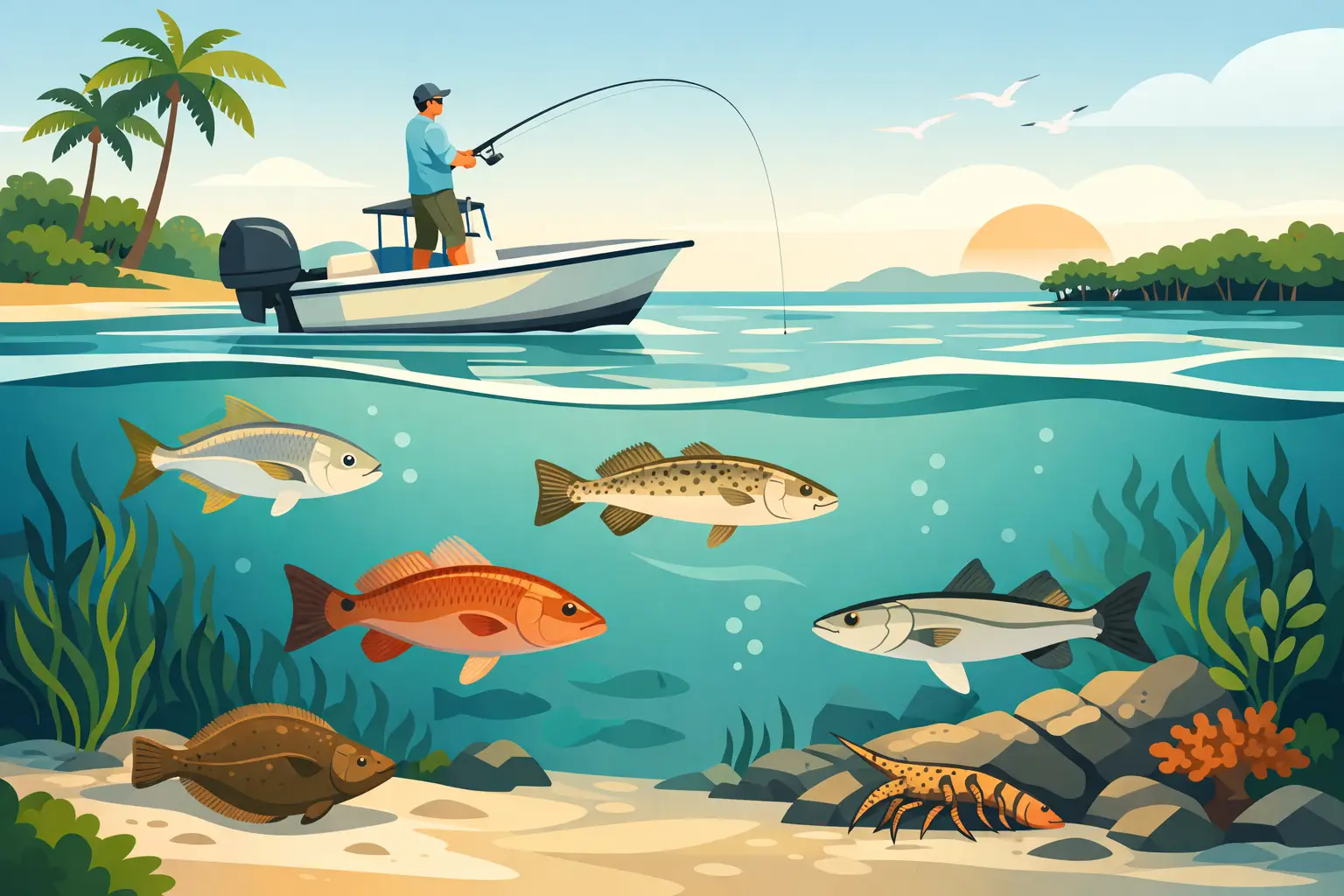
The first swirl beside a mangrove shoreline may be a snook. A school flashing over a grass flat could be speckled trout. And the heavy pull near a bridge piling might belong to a redfish, jack, or sheepshead. If you are asking what fish are inshore, the short answer is: far more than most visitors expect.
Southwest Florida’s protected bays, tidal creeks, mangrove islands, grass flats, and passes create a productive nursery and feeding ground for an impressive range of fish. Conditions shift with tide, water temperature, salinity, and season, so no two outings look exactly alike. That variety is part of what makes inshore fishing so rewarding for beginners and experienced anglers alike.
What Does Inshore Fishing Mean?
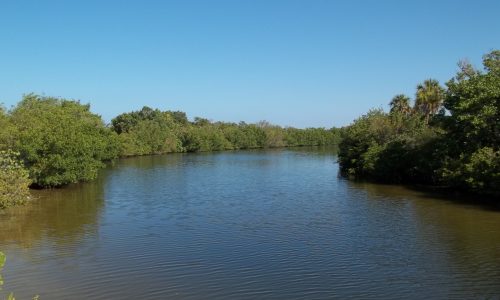
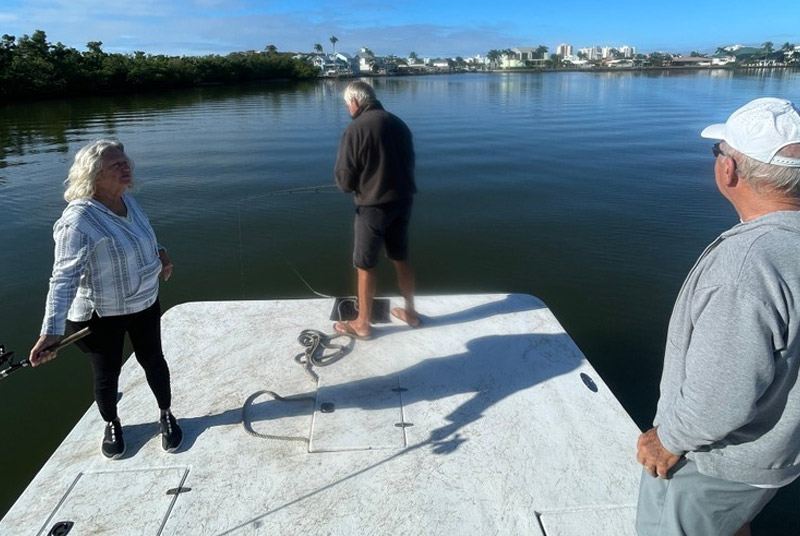
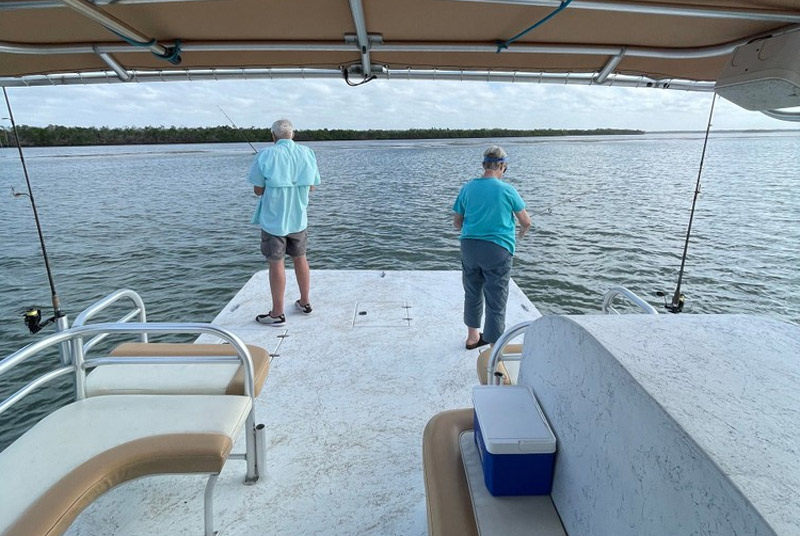
Inshore fishing takes place in protected or near-coastal water rather than far offshore in the Gulf. Around Fort Myers Beach, that can mean quiet back bays, the waters around Estero Bay, mangrove shorelines, shallow flats, dock lines, and the passes connecting the bay to open water.
These waters are generally calmer than offshore seas, although wind and tide still matter. They also hold habitat close together: oyster bars, sandy potholes, seagrass, structure, and tidal current. Fish move among these areas to find food, shelter, and the right water conditions.
“Inshore” does not describe one specific depth or one fixed list of species. A fish that feeds in a pass one day may move farther into the bay or closer to the mangroves the next. The best approach is to watch the water and let the conditions tell the story.
The Inshore Fish Florida Anglers Hope to Find
Snook
Snook are one of Southwest Florida’s signature inshore game fish. Their bold black lateral line, powerful runs, and habit of striking near cover make them a favorite for light-tackle anglers. They often hold around mangrove edges, dock pilings, bridges, seawalls, and tidal current lines.
Snook are especially active when bait is moving and water is warm enough for them to feed confidently. They can be selective, though. A bright afternoon, strong current, or cold snap may change where they sit and what they will eat. Because snook regulations and seasonal closures can change, anglers should always verify current Florida rules before keeping a fish.
Redfish
Redfish, also called red drum or simply “reds,” are another classic answer to the question of what fish are inshore. Look for their bronze-to-copper coloring and the distinctive black spot near the tail. They often cruise shallow grass flats, sandy shorelines, oyster edges, and mangrove creeks in search of crabs, shrimp, small fish, and other easy meals.
Redfish can be found alone, in pairs, or in groups. On calm, shallow water, you may spot a tail or back breaking the surface as a fish feeds nose-down. That visual element makes redfish fishing especially exciting, but it also rewards a quiet approach. Too much boat noise or a poorly placed cast can send shallow fish moving.
Spotted Seatrout
Spotted seatrout, often called speckled trout, are common across grass flats and deeper channels bordering those flats. Their dark spots, silvery sides, and willingness to eat a well-presented bait make them an approachable target for first-time anglers.
Trout often feed where clean moving water meets seagrass, particularly around potholes and drop-offs. They are not usually as structure-focused as snook, so anglers can cover a broader area while searching for them. Larger trout may prefer deeper edges, while smaller fish frequently gather in more open grass-flat habitat.
Tarpon
Tarpon are the fish that can turn a calm morning into a story told for years. Known for their size, acrobatic jumps, and gleaming silver scales, they travel through passes, bays, and coastal shorelines as they follow bait and seasonal patterns.
Not every inshore trip is a tarpon trip, and encounters depend heavily on time of year and local conditions. Still, seeing tarpon rolling at the surface or watching one chase bait near a pass is a memorable wildlife moment even when they are not the day’s main target. Tarpon are generally pursued as catch-and-release fish, with careful handling essential to their survival.
Mangrove Snapper and Sheepshead
Structure holds life, and mangrove snapper and sheepshead know it. Mangrove snapper are often found around mangrove roots, docks, rocks, bridges, and other cover. They are alert, quick, and known for stealing an offering before an angler feels the bite. Their numbers often increase around structure when bait is present.
Sheepshead are easier to recognize, with black vertical bars that give them a striped, almost convict-like appearance. They are especially associated with barnacle-covered pilings, seawalls, oyster habitat, and rocks, where they feed on crustaceans and other hard-shelled prey. Their subtle bite can challenge even capable anglers.
Jacks, Ladyfish, and Other Fast-Moving Visitors
Not every exciting inshore catch needs to be a trophy fish. Crevalle jack are powerful, hard-fighting fish that may crash bait schools along shorelines, channels, and passes. Ladyfish are acrobatic and energetic, often providing plenty of action for families and newer anglers.
Depending on the season and location, anglers may also encounter black drum, flounder, pompano, Spanish mackerel, bluefish, tripletail, and small sharks. Some species become more likely near the Gulf passes, while others favor very shallow backwater or bottom structure. That mix is why a day of inshore fishing can be wonderfully unpredictable.
Where Inshore Fish Spend Their Time
Fish do not spread themselves evenly across the bay. They gather where food, current, oxygen, and cover line up. Mangrove shorelines provide shade, roots, and refuge for baitfish and juvenile fish, which draws predators such as snook, redfish, snapper, and jacks.
Seagrass flats are another vital habitat. Grass shelters shrimp, crabs, and baitfish, while sandy holes within the grass create natural feeding stations. Speckled trout and redfish often work these areas, especially when the tide provides enough water to move comfortably across the flat.
Passes, bridges, and channel edges concentrate current. Moving water carries bait and dislodges prey, creating an easy feeding opportunity for fish positioned out of the strongest flow. Snook, tarpon, jacks, mackerel, snapper, and sheepshead may all use these places, though the species present can change with the season.
Tide and Season Matter More Than a Calendar Date
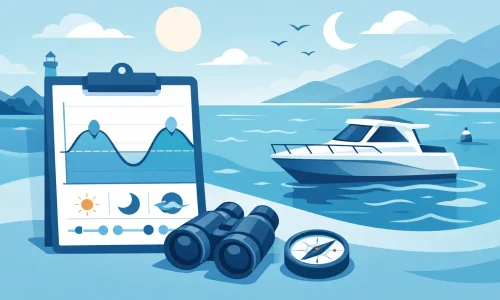
A fishing calendar can provide a useful starting point, but inshore fish respond to real-time conditions. An incoming tide may flood shallow grass or mangrove edges, allowing redfish and snook to push into feeding areas. A falling tide can pull bait out of those same places and funnel fish toward creek mouths, points, and deeper cuts.
Water temperature matters, too. Florida’s warmer months often bring active snook, tarpon, jacks, and mangrove snapper. Cooler weather can make sheepshead, black drum, and some trout patterns more noticeable. A sudden cold front may slow certain species down and move them toward deeper, more protected water.
Water clarity is another trade-off. Clear water can make it easier to spot fish, but it also makes them more cautious. Slightly stained water may give predators confidence to feed close to shore. A knowledgeable captain reads these changes instead of treating any season as a guarantee.
A Better Way to Watch for Fish
Even guests who are not focused on catching fish can learn to recognize signs of inshore life. Watch for baitfish dimpling the surface, birds working over feeding schools, a swirl tight to mangroves, or a nervous patch of water moving across a flat. These clues often reveal where the food chain is active.
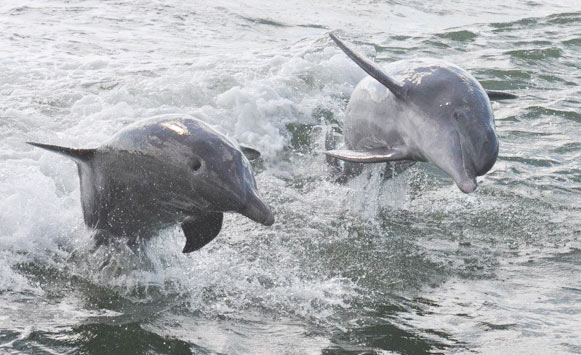
Respect for the habitat belongs in every good day on the water. Avoid running through shallow seagrass, give wildlife room, follow current fishing regulations, and handle released fish carefully. Healthy estuaries support the fish people come to see and catch, along with dolphins, shorebirds, manatees, and countless smaller creatures.
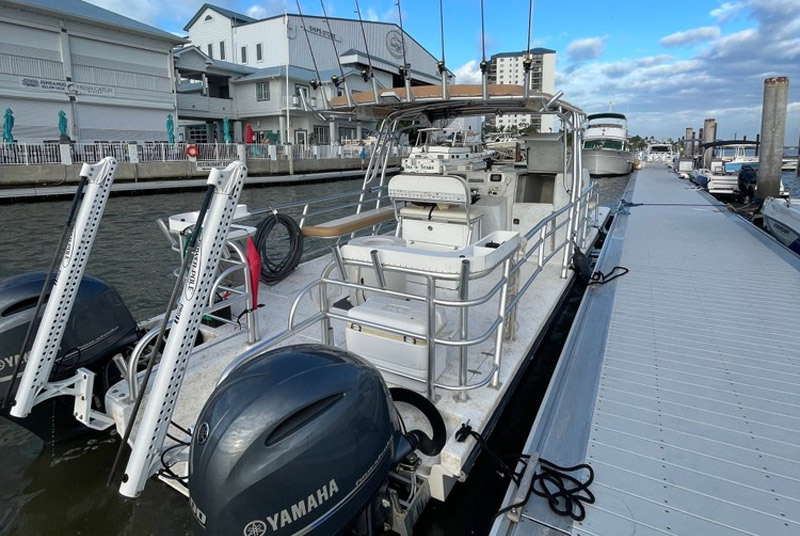
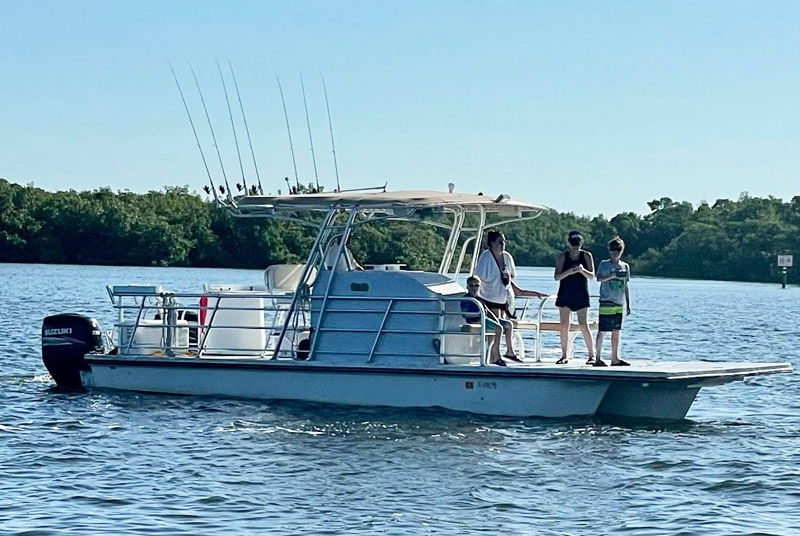
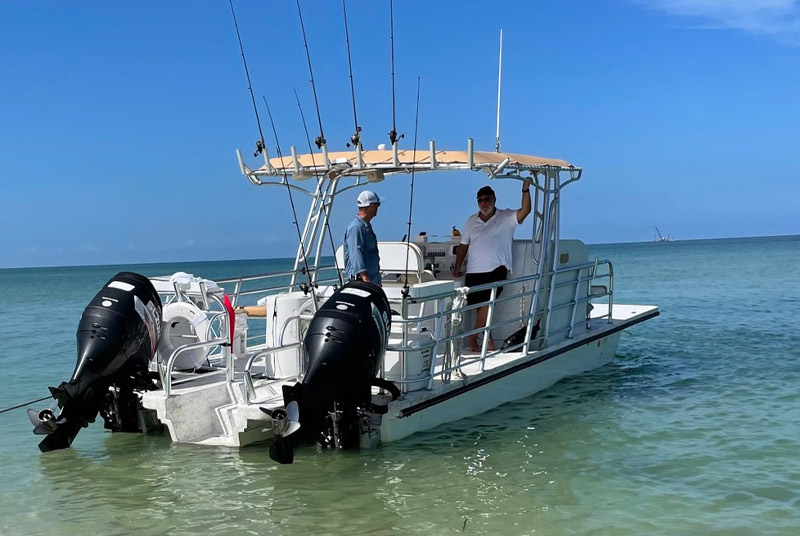
A private backwater fishing trip with Good Time Charters gives visitors a comfortable, expert-led way to experience these waters, whether the goal is a first fish, a family memory, or a closer look at the ecosystem beneath the surface. The next tide may bring a different cast of characters, and that is exactly what keeps inshore fishing interesting.